
Your child has the portfolio. They have the CCA record, the achievements, the passion.
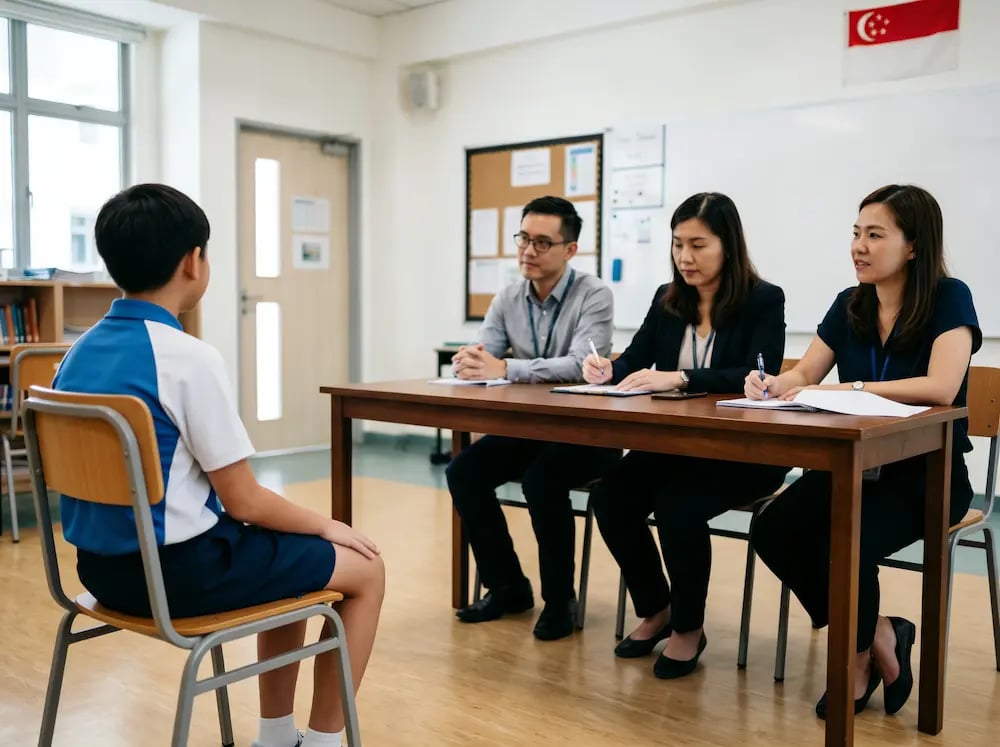
But when they sit across from a three-person interview panel in July, none of that will matter if they cannot speak about it clearly.
This guide covers everything parents need to know about DSA interview preparation Singapore in 2026. What panels are actually looking for. Why so many well-prepared children freeze. And how to help your child walk in with genuine confidence.
1. What DSA interviewers in Singapore are actually looking for
Schools like Raffles Institution, Nanyang Girls' High, and Hwa Chong receive hundreds of applications from children with strong portfolios in a single talent area. When every candidate has a list of achievements and leadership positions, the portfolio stops being the differentiator.
The interview is where the real decision gets made. A shortlist means the school already saw potential in your child. Not receiving an offer after that point means something broke down in the room. That is the part worth preparing for.
Interviewers are not looking for a rehearsed script. They are looking for a child who can speak about their interests honestly, handle a question they did not prepare for, and show genuine curiosity and composure in the conversation.
They want to see whether your child belongs in their school culture, not just whether they qualify on paper. You can read a first-hand account of how one Singapore family navigated the DSA process and what made the difference on interview day.
2. Why well-prepared children freeze in DSA interviews
It is not a lack of knowledge. It is not a lack of preparation. It is the gap between knowing something and being able to say it clearly under pressure.
Many children enter an interview room with carefully rehearsed answers. The moment a panel asks something unexpected, the script falls apart. They give one-word answers. They trail off. They say things they did not mean.
This gap between preparation and performance is what DSA interview preparation Singapore coaching addresses. The goal is not to give your child better answers. It is to help them think and speak at the same time, clearly, under pressure, without a script.
3. The three things every DSA interview panel notices
How your child enters the room
The interview begins before your child says a word. Posture, eye contact, and the way they introduce themselves signal confidence or anxiety immediately. A child who sits upright, makes steady eye contact, and speaks their name and school clearly has already made a positive impression.
Whether their answers go beyond the surface
Generic answers lose marks. "I want to join your school because it has a good environment" tells a panel nothing. A specific, honest answer about a programme, a value, or a personal goal shows that your child has thought carefully and speaks from genuine interest.
At SuperMinds, we use structured speaking frameworks developed specifically for children. Simple enough to remember under pressure. Practical enough to use in any real situation.
How they handle the question they did not prepare for
Every DSA interview includes at least one unexpected question. Panels do this deliberately. They want to see how your child responds when they cannot rely on a rehearsed answer.
One of the most common is the weakness question. "What has your teacher pointed out that you need to work on?" or "What is something you are still trying to improve?" Many children freeze here, or give a polished non-answer like "I work too hard" or "I care too much." Panels see through this immediately.
What they are actually looking for is self-awareness. A child who can say honestly "I sometimes rush through my work when I am excited about a project, and my teacher has pointed out that I need to slow down and check" is showing something far more valuable than a child who sounds impressive. They are showing that they know themselves, that they reflect on their own behaviour, and that they are the kind of person who grows.
The interview is not about looking good. It is about being real. The children who leave the strongest impression are not always the most accomplished. They are the ones who speak about themselves with honesty and without pretence.
The right response is not a perfect answer. It is a calm, honest one. Teaching your child to pause briefly, acknowledge the question, and think before they speak signals exactly the maturity schools are looking for.
4. What DSA interview preparation at SuperMinds covers
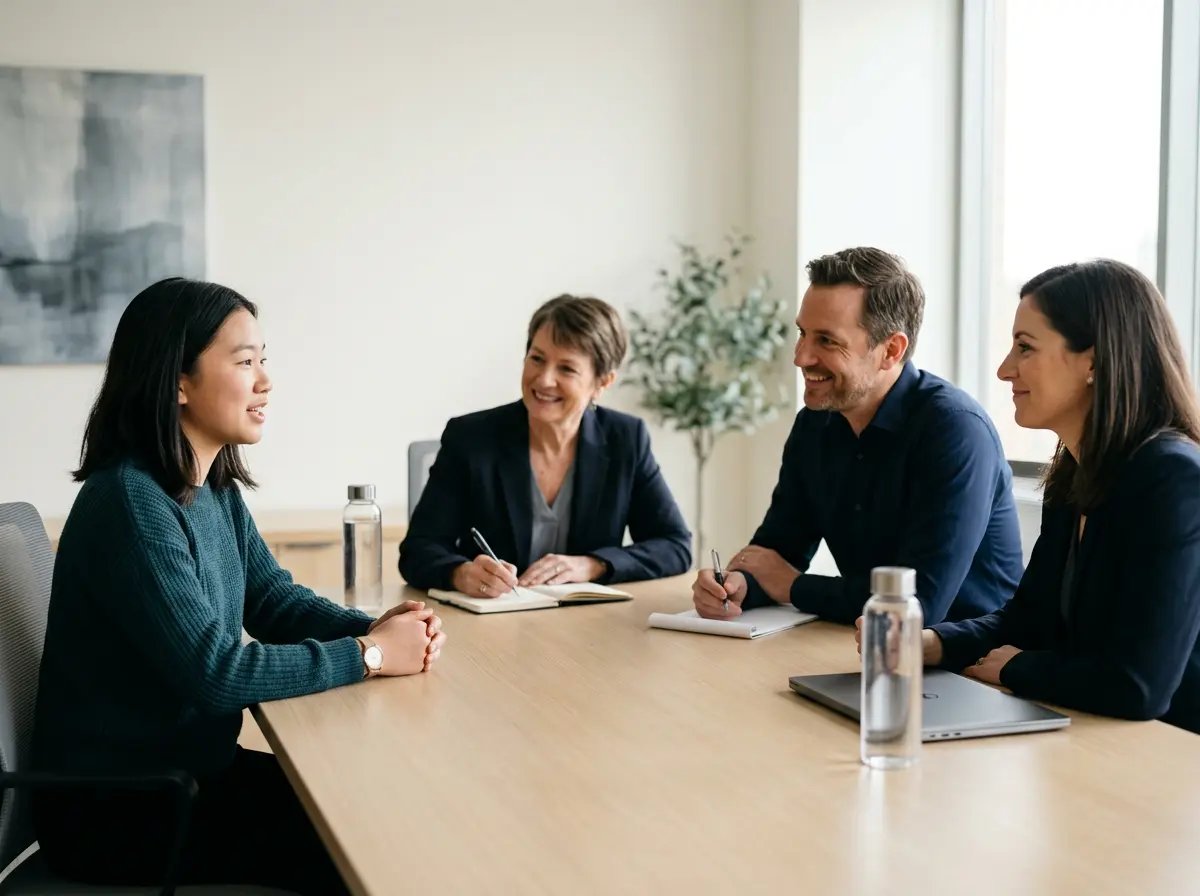
Our DSA Interview Preparation programme is structured across four private sessions, each building on the one before.
Session 1: Diagnostic and Positioning (1-hr Private Online)
We identify your child's current level, uncover useful experiences and strengths, and determine the main areas that need improvement, whether that is confidence, clarity, content, or composure.
Session 2: Answer-Building and Coaching (1-hr Private In-Person)
We help your child shape stronger answers, improve their self-introduction, and speak with more structure, sincerity, and confidence.
Session 3: Interview Practice and Response Sharpening (1-hr Private In-Person)
We practise common DSA-style interview questions more actively, strengthen weaker answers, and help your child respond with better clarity, relevance, and composure under pressure.
Session 4: Final Mock and Polishing (1-hr Private In-Person)
We bring everything together through a final mock interview, refine weak areas, and help your child feel more prepared, polished, and interview-ready.
Optional Add-On: Group Interview Simulation (2-hr Group In-Person): S$98
Students practise in a realistic group setting and learn how to contribute more confidently, listen better, respond more meaningfully, and carry themselves more effectively in front of peers.
5. How to help your child prepare at home
Know the school your child is applying to. Your child should be able to name something specific about the school that connects to their own interests. Vague admiration for a "top school" is not enough. The MOE DSA-Sec portal lists all participating schools and their talent domains.
Bank three or four personal stories. Help your child identify specific moments from their CCA, school life, or personal experience that demonstrate a value like resilience, teamwork, or initiative. These stories can be adapted to many different questions.
Practise answering questions you did not prepare for. Ask your child unexpected questions at the dinner table. Give them five seconds to think, then ask them to answer in full sentences. The goal is not the right answer. It is the habit of speaking calmly when they are caught off-guard.

6. About SuperMinds
SuperMinds was designed by Iwan Yang, Singapore's most reviewed communication trainer, with more than 500 five-star reviews and 3,000+ students coached across Singapore and Asia.
Every SuperMinds class reflects the method Iwan has refined across a decade of coaching. Our DSA programme is delivered as private one-to-one sessions, with an optional group simulation for those who want group interview practice.
250 Tanjong Pagar Road, St Andrew's Centre, #04-01, Singapore 088541. Near Tanjong Pagar MRT. WhatsApp: +65 6602 8262. superminds.com.sg
7. Frequently asked questions
When should we start DSA interview preparation?
Ideally in Primary 5. This gives your child time to build communication habits before the pressure of the July application window. If your child is already in Primary 6, starting immediately still makes a meaningful difference.
My child is very shy. Is DSA interview coaching suitable for them?
Yes. Many of the children who benefit most from structured interview coaching are the quieter ones. They often have rich experiences to share and simply need the tools and practice to say it clearly. Confidence in speaking is a skill, not a personality trait.
Should I coach my child on exactly what to say?
No. Over-coaching produces rehearsed-sounding answers that panels immediately recognise. The goal is to help your child understand their own story and express it honestly, not to give them a script. Panels specifically look for authentic responses, not polished ones.
What if my child does not know the answer to a question?
Teach them to be honest and composed. A simple "Thank you for your question. Please give me a moment to think about it" is far more impressive than a rushed or made-up answer. If they were caught off-guard and did not catch the question, "Could you please repeat the question?" is perfectly appropriate. Panels are not looking for children who have all the answers. They want to see how a child handles uncertainty with grace.
How long does a DSA interview usually last?
Between 10 and 20 minutes, depending on the school. Short, but high-stakes. Every exchange in that window matters, which is why practising composure and structured speaking in advance is so important.
8. The next step
The difference between a Confirmed Offer and a Wait List result often comes down to what happens in those 15 minutes.
Book a trial class and see where your child stands. You will receive a video recording of your child speaking and a written evaluation from a SuperMinds coach.
Trial class: S$59.50. WhatsApp +65 6602 8262 or book at superminds.com.sg.
250 Tanjong Pagar Road, St Andrew's Centre, #04-01, Singapore 088541. Near Tanjong Pagar MRT.