
Singapore has one of the most active toddler enrichment markets in the world. By the time a child turns three, many Singapore parents are already comparing programmes, weighing waiting lists, and budgeting for weekly classes.
The question most parents don't ask is the most important one: what exactly is this building in my child? For parents who care about communication, which shapes school performance, social development, and long-term confidence, the answer to that question determines which enrichment classes are actually worth attending.
1. What Are Enrichment Classes for Toddlers?
2. What Types of Enrichment Do Toddlers in Singapore Attend?
3. What Should Enrichment Actually Develop in a Toddler?
4. What to Look For When Choosing a Toddler Enrichment Programme
5. At What Age Should Toddlers Start Enrichment Classes?
1. What Are Enrichment Classes for Toddlers?
In Singapore, enrichment classes for toddlers refer to structured learning activities for children in the early years, from around 18 months to age 3, offered outside of their regular childcare programme. The range is wide: music, arts and crafts, early phonics, Mandarin immersion, swimming, gymnastics, STEM exploration, and speech and drama. Once a child is between 3 and 6, the options widen further, and our guide to the best enrichment classes for preschoolers covers that stage in detail.
The word "enrichment" implies something supplementary, an add-on to what the child already gets at home and in school. For toddlers, it signals structured, adult-facilitated learning in a social setting. What it does not automatically signal is intentional development of any specific skill. Many enrichment classes focus on exposure and enjoyment. That is valid, but it is different from targeted developmental benefit.
Understanding the difference helps parents make a much more useful decision about where to spend their time and money.
2. What Types of Enrichment Do Toddlers in Singapore Attend?
The Singapore enrichment landscape for toddlers covers several broad categories, each building different foundations.
Language and literacy: Phonics programmes, early reading classes, Mandarin enrichment, and bilingual storytelling. These build vocabulary and introduce reading concepts before P1. Among all enrichment types, language-focused classes have the most direct connection to communication development.
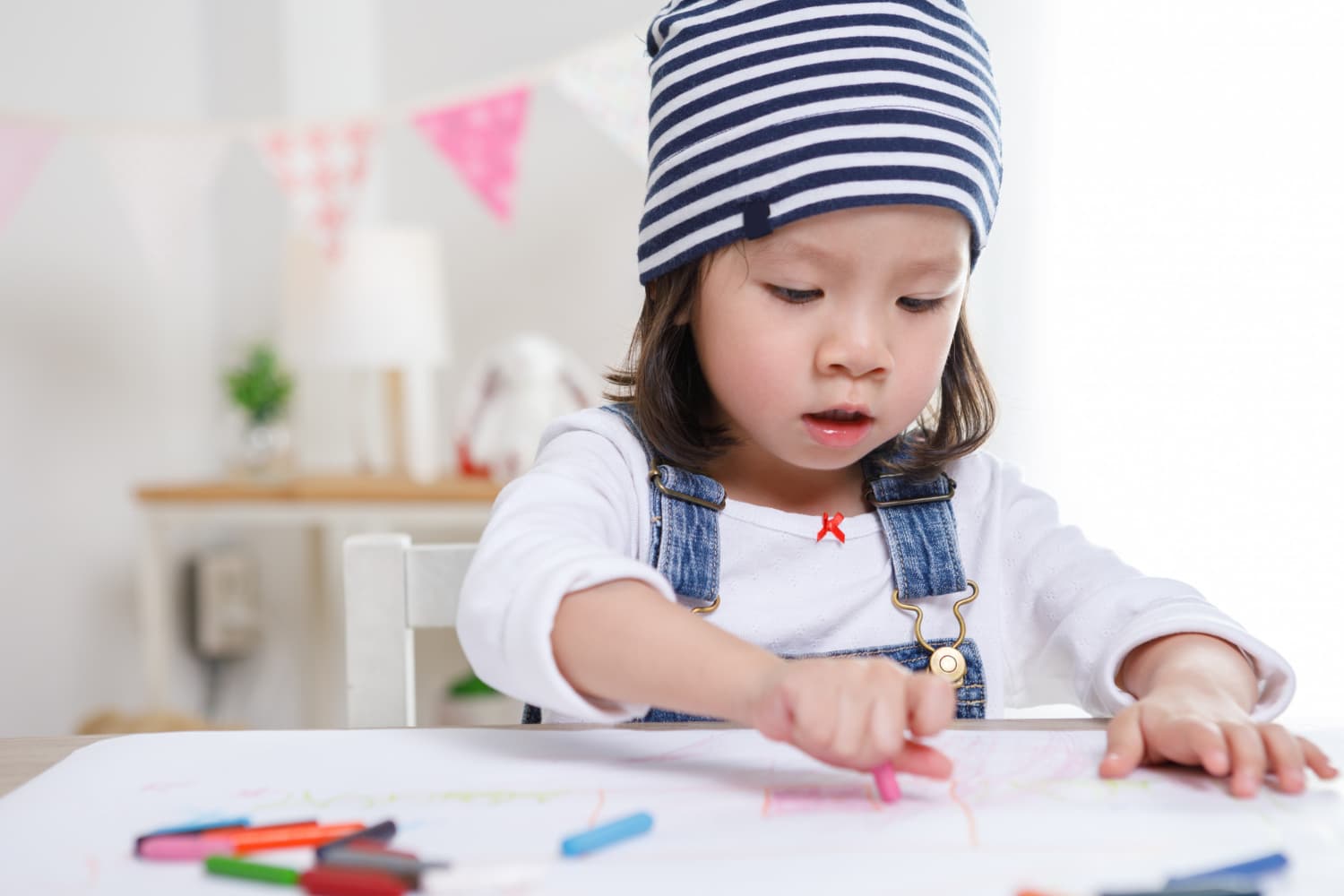
Arts and creativity: Drawing, painting, clay, and craft-making. These develop fine motor skills and self-expression. Children who develop early comfort with self-expression through making tend to transfer that comfort to verbal expression over time.
Music: Keyboard, violin, kindermusik, and choral singing. Music builds auditory discrimination, memory, and the ability to follow structured sequences, cognitive foundations that support language learning indirectly but meaningfully.
Physical activity: Swimming, gymnastics, dance, and martial arts. Physical confidence and body awareness are more closely linked to communication confidence than many parents realise. Children who feel capable in their bodies tend to be more willing to try, speak up, and persist.
Speech and drama / storytelling: Role play, puppet shows, narrative activities, and simple performance. These explicitly develop verbal communication and listening, the most direct path to the skills that matter in school.
3. What Should Enrichment Actually Develop in a Toddler?
Before choosing a class, it helps to be clear about what foundations you are trying to build. For parents focused on communication and school readiness, four areas matter most in the toddler years.
Vocabulary depth. A child's vocabulary at age 5 is one of the strongest predictors of reading comprehension and academic performance at age 10. Classes and home environments that expose toddlers to rich, specific language, by naming things precisely and describing rather than just pointing, build this foundation. The difference between a child who says "that thing" and one who says "the ladle" is not intelligence. It is exposure and vocabulary habit.
Curiosity and willingness to ask. Toddlers who are encouraged to ask questions and receive genuine answers develop the habit of seeking information through language. This requires interactive environments where the child's communication is valued and responded to, not just settings where they listen or watch.
Listening and attending. Communication is two-way. Toddlers who are consistently in settings where they are expected to listen and respond, not just perform, develop better conversational skills. Small group classes with a facilitator who asks and waits for responses build this faster than large-group activities where children can disappear into the crowd.
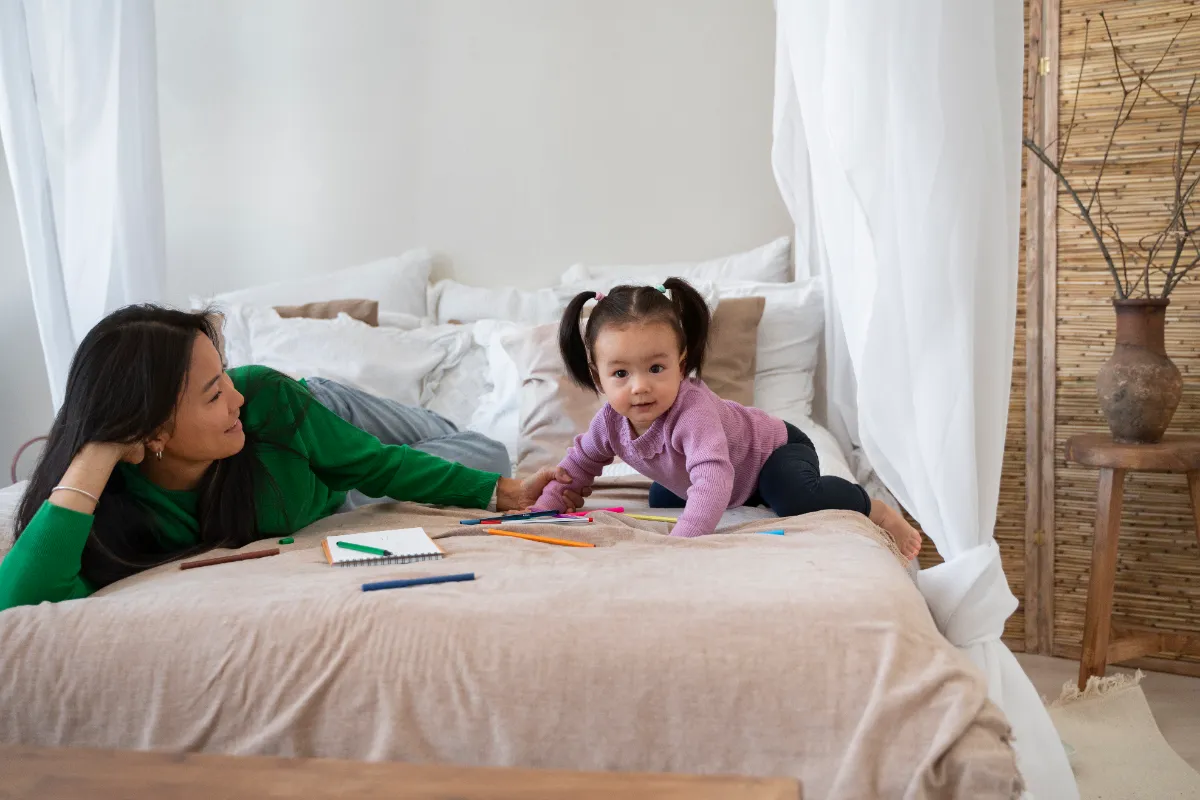
Social confidence in unfamiliar settings. Being willing to speak and interact with people outside the immediate family. This is built through repeated positive experiences in small, structured group environments, not forced socialisation in chaotic or overwhelming settings.
4. What to Look For When Choosing a Toddler Enrichment Programme
Given the above, here are the markers of a toddler enrichment programme that is genuinely building communication foundations.
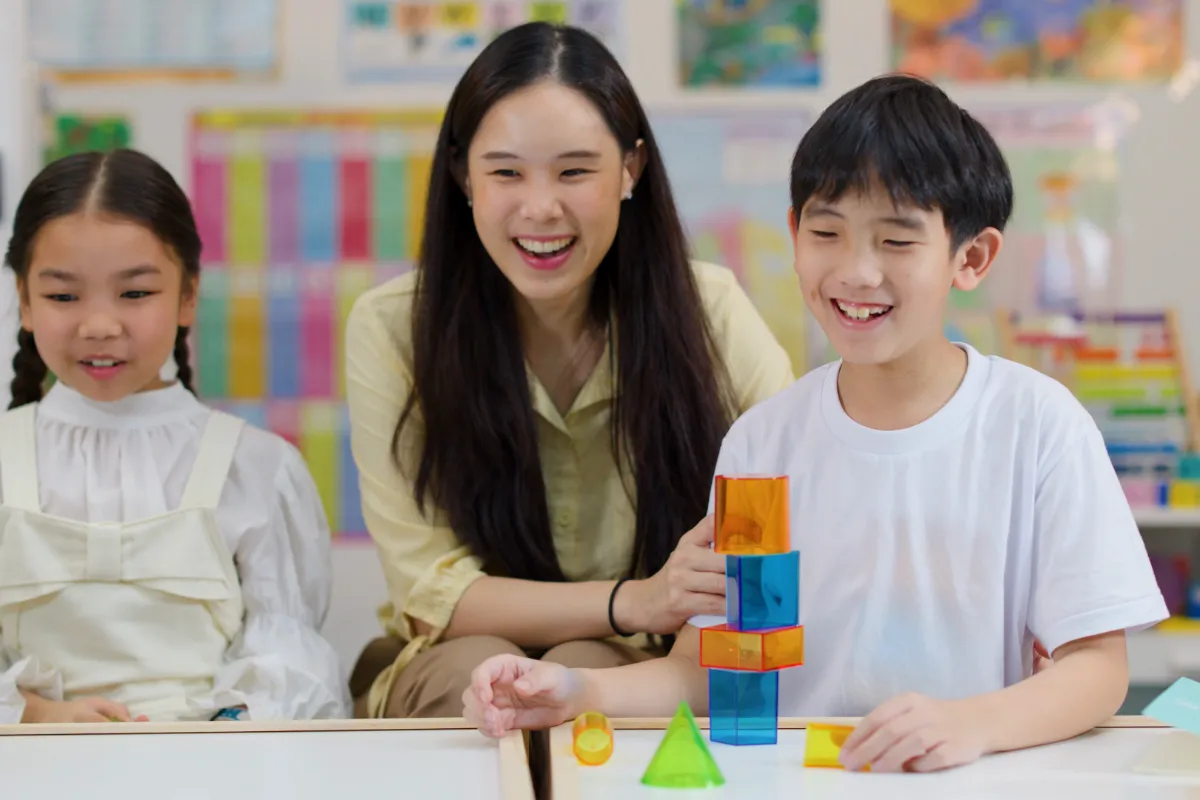
Small group sizes. A class of 6 to 8 children gives each toddler meaningful turn-taking, attention, and interaction density. A class of 20 is primarily crowd management. For communication development, how often your child speaks and is responded to matters far more than the content of any individual activity.
Trained, responsive facilitators. The most effective enrichment teachers for toddlers do not just deliver activities. They ask open questions, wait for responses, extend what the child says, and naturally introduce new vocabulary in context. This dialogic interaction is the gold standard for early language development, and it is a skill that requires training, not the default mode of most adults with children in groups.
Language-rich activities. Does the class involve storytelling, narration, description, or discussion? Is the vocabulary used specific and precise? Are children asked to explain and describe rather than just produce? A painting class where children are asked "tell me what you made and why you chose those colours" builds more communication than one where they silently create and go home.
Structured variety. Toddlers develop best in environments that have enough routine to feel safe and enough novelty to stay engaged. Classes that are too rigid produce compliance. Classes that are too unstructured produce chaos. The sweet spot, a reliable structure with changing activities within it, is what most skilled toddler enrichment facilitators aim for.
5. At What Age Should Toddlers Start Enrichment Classes?
There is no single right answer, but there are useful developmental markers. Most toddlers are ready for simple structured activities from around 2 years old. At this age they have enough language to follow basic instructions, enough attention to sustain a 20 to 30 minute class, and enough social awareness to notice and begin interacting with other children.
From around age 3, as your child moves from toddler into the preschool years, the options widen and the question shifts from readiness to fit. Our guide to the best enrichment classes for preschoolers covers that 3 to 6 stage, including how to choose the right type without over-scheduling.
The more useful question is not "when should we start" but "what do we want this period to build?" A clear developmental goal makes it much easier to evaluate whether a specific programme is delivering what your child actually needs.
6. From Toddler Enrichment to Primary School Communication
The foundations built in toddler enrichment classes do not produce results in weeks. They compound over years.
A toddler who attended a language-rich storytelling programme at age 3 arrives at P1 with a larger vocabulary, stronger listening habits, and more comfort speaking in front of unfamiliar adults. These advantages do not disappear at the school gate. They become the foundation on which primary school communication development builds.
By P3 (age 9), children face real communication demands: oral examinations, school presentations, group project collaboration, and increasingly complex social interaction with peers and teachers. The difference between children who handle these confidently and those who freeze or stay silent is rarely intelligence. It is foundation, and the willingness to keep building it.
If your child is still in the toddler or preschool stage, the investment in communication-rich enrichment now is one of the highest-return things you can do for their school readiness. If your child has already moved into primary school, our guide to the best enrichment classes for kids in Singapore covers what to prioritise, and structured communication training at that level builds on whatever foundation was laid earlier, closing gaps where that foundation is thin.
For a look at what structured communication development looks like from P3 onwards, see our guide to public speaking classes for children in Singapore.
7. About SuperMinds
SuperMinds is Singapore's communication specialist for children and teens aged 9 to 17. Best known for public speaking, we help young people find their voice: the confidence to speak up, lead, and succeed in school and in life. The method was pioneered by Iwan Yang, Founder & Programme Director, who spent years working with professionals across Asia. When his adult students began asking him to train their children, he adapted his methodology for primary and secondary school students, and found that those who learn structured communication early gain an advantage that compounds through every year of school.
Every SuperMinds session runs in groups of up to 8 students, the same small-group density that research identifies as optimal for communication development. Students speak in every session, receive structured feedback from trained coaches, and progressively build their ability to form and express ideas with clarity, confidence, and composure.
SuperMinds is not a toddler enrichment programme. It is the natural next step for children who have moved through the preschool years and are now in primary school, ready for structured communication training at the level their school actually demands.
Trial classes are available at S$59.50 and include a video recording of your child speaking plus a written evaluation from a trained SuperMinds coach.
Book a trial class if your child is in P3 to P6 and ready for the next stage of communication development.