


Your child brings home a marked worksheet, sees the red ink, and their face falls. Or a friend points out a mistake in their drawing, and they snap, sulk, or burst into tears. Feedback stings.
It helps to know this is normal. To a child, being corrected can feel like being told they are not good enough. But learning to give and receive feedback well is one of the quiet skills that shapes their whole school journey. A child who can hear feedback keeps improving. A child who can give it well becomes a better friend and teammate. Both can be taught, and the earlier you start, the easier it gets.
This guide is about your child's side of feedback: how to help them take it without shutting down, and give it to others with honesty and kindness. These are communication skills, and like any skill, they grow with practice.
1. Why Feedback Feels Like a Threat to Children
When a child is corrected, their brain often reads it as danger, not help. Being critiqued can trigger the same fight, flight, or freeze response as a real threat. That is why your child argues, goes quiet, or melts down. It is not bad behaviour. It is a nervous system doing its job.
The child psychologists at the Child Mind Institute note that acknowledging a child's feelings first, before addressing the feedback itself, makes it far easier for them to take it in. The emotion has to settle before the message can land.
How a child sees their own ability matters too. Stanford psychologist Carol Dweck's work on mindset shows the difference. A child with a fixed mindset hears feedback as a verdict: I am not clever. A child with a growth mindset hears the same words as information: this is how I get better. The good news is that mindset is not fixed. The way feedback is handled at home can shift a child from one to the other.
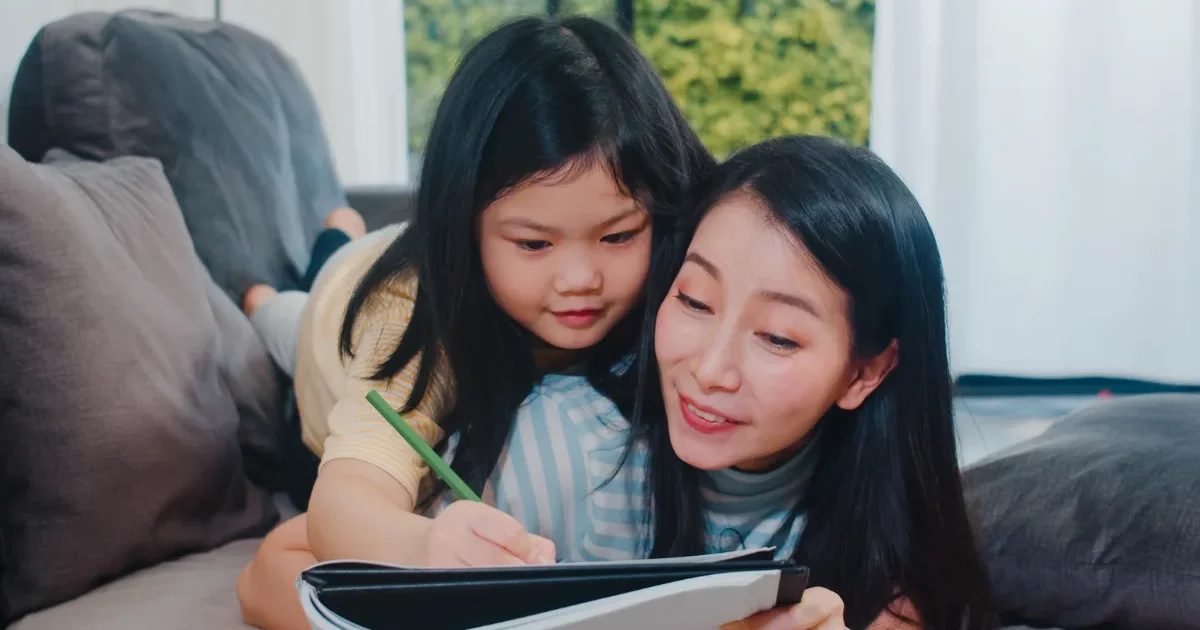
2. Helping Your Child Receive Feedback Without Shutting Down
Receiving feedback well is a skill, not a personality trait. Your child can learn it with a simple routine they can use in the moment.
Teach them to pause before reacting. One slow breath is enough to take the heat out of the first response. Then listen to the whole thing before answering, rather than defending halfway through.
Next, ask one question. A calm "Can you show me what you mean?" or "Which part should I change?" turns feedback from an attack into a conversation. It also buys a few seconds to steady the emotions.
Finally, help them separate the message from their worth. A mistake in a maths sum is not a statement about who they are. Naming the feeling out loud helps: "I feel annoyed right now, and that is okay." Simply naming an emotion reduces its intensity.
Practise this when the stakes are low, over a board game or a drawing, so the routine is familiar before a real correction arrives. The more ordinary feedback feels at home, the less it stings at school.
3. Teaching Your Child to Give Feedback Kindly
Children often swing between two extremes: blunt ("this is boring") or silent. Giving useful feedback is a middle path, and it can be taught.
A simple frame works well: one thing I like, one thing I wish. "I like how bright your painting is. I wish I could see more in the background." It pairs honesty with encouragement, and any child can use it.
Teach them to comment on the work, not the person. "The ending felt rushed" helps. "You are a bad writer" wounds. Feedback about a specific choice can be acted on. Feedback about character just hurts.
Match the approach to their age. From Primary 1 to 2, keep it to one kind observation. By the upper primary years, children can give specific, useful suggestions to a classmate with a little guidance. Teens can go further, offering feedback on a friend's presentation and reflecting on their own work first.
Structured practice helps. Educators writing for Edutopia recommend giving children sentence starters, like "I noticed..." and "Have you thought about...?", so peer feedback stays specific and kind. Singapore's National Institute of Education found that getting children to reflect on feedback, rather than just hear it, is what builds the skill for the long term.
4. Feedback in the Singapore Classroom
In Singapore, feedback is not a side issue. It arrives constantly: in marked work, teacher comments, report cards, and group projects. A child who can take it calmly has a real advantage.
It shows up in high-stakes moments too. In the PSLE Oral, an examiner may steer a child mid-conversation, and the child who adjusts without freezing does better. In a DSA interview, panellists often probe and challenge answers on purpose, watching how a candidate responds under pressure. In CCA and group work, children give and take feedback with peers every week.
This is also why MOE places resilience at the centre of its approach, describing the goal as nurturing confident, resilient learners. A child who treats feedback as fuel rather than failure carries that steadiness into every exam hall and interview room.
Handling feedback is really a communication skill in disguise. It sits alongside active listening and speaking up clearly, and it is one reason communication training is worth prioritising among the enrichment classes on offer.
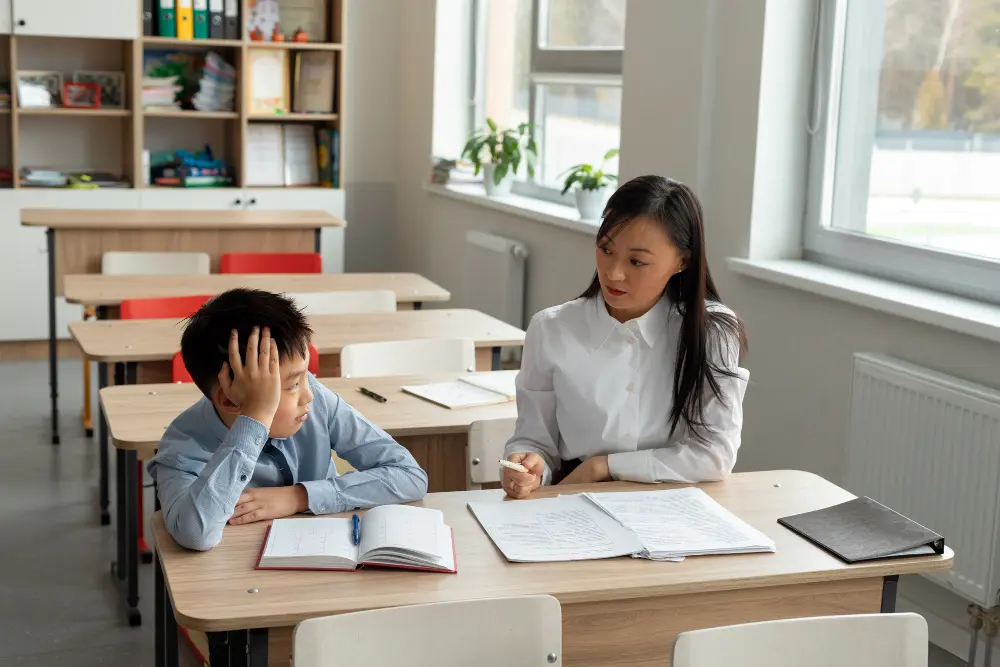
5. Building a Feedback-Friendly Home
Children learn how to handle feedback mostly by watching how it is handled around them. A few small habits make a big difference.
Make appreciation normal. At dinner, take turns naming one thing someone did well that day. When feedback is part of ordinary life, the harder kind feels less threatening.
Swap "yet" for full stops. "I can't do this" becomes "I can't do this yet." That one word, drawn from growth-mindset research, keeps the door open and lowers a child's resistance to trying again.
Model it yourself. When someone gives you feedback, even your own child, thank them and think aloud: "That is a fair point, let me try it." Children copy what they see far more than what they are told.
How you deliver feedback to your child matters just as much as how they receive it. That is a topic in its own right, and we cover it in our guide on how to give your child constructive feedback. The short version: be specific, focus on the action rather than the child, and pair one thing that went well with one thing to try next.
About SuperMinds
SuperMinds is Singapore's communication specialist for children and teens aged 9 to 17. Best known for public speaking, we help young people find their voice: the confidence to speak up, lead, and succeed in school and in life.
The SuperMinds method was pioneered by Iwan Yang, Founder & Programme Director and Singapore's most reviewed communication trainer. After years coaching working professionals, he created SuperMinds for children and teens when his adult students asked him to train theirs, bringing proven communication training to younger learners. Handling feedback is part of that training: in small classes capped at 8 students, children learn to take a coach's notes on the spot, adjust, and try again, so a correction becomes something to use rather than something to fear.
We often see the shift within a term. A child who once went quiet at any correction starts asking, "What should I try next?" Classes are led by Iwan Yang and trained SuperMinds coaches working under his method.
If you would like to help your child grow more confident with feedback and speaking, explore the SuperMinds children's programme for ages 9 to 12, or book a trial class. The trial costs S$59.50 and includes a video recording of your child speaking and a written coach evaluation.
6. Frequently Asked Questions
Why does my child get upset when I correct them?
Young children often hear a correction as a judgement of who they are, not their work, which can trigger a fight, flight, or freeze response. Acknowledge the feeling first, give them a moment, then return to the feedback. With practice, they learn to see it as helpful information.
How can I help my child take feedback from teachers at school?
Teach a simple routine: pause, listen fully, and ask one question before reacting. Practise it at home on low-stakes things so it feels familiar. Praising effort at home also makes feedback feel safe rather than threatening.
What is the difference between criticism and constructive feedback?
Criticism points out what is wrong and stops there. Constructive feedback also shows a way forward, pairing an honest observation with a specific, kind suggestion for what to try next. Teaching children this difference helps them filter what they hear and improve what they give.
At what age can children learn to give feedback to others?
From around Primary 1 to 2, children can offer simple, kind observations. By the upper primary years they can give specific, useful feedback to a classmate with a little guidance. Teens can go further, reflecting on their own work before commenting on someone else's.
Does handling feedback well build a growth mindset?
Yes. A child who treats feedback as information rather than failure comes to see effort as the path to improvement, which is the heart of a growth mindset. The language you use, such as adding "yet" to "I can't do this", reinforces it.
How is receiving feedback linked to communication skills?
Listening to feedback without getting defensive is a form of active listening, and responding to it calmly is a form of clear speaking. Children who handle feedback well tend to communicate better in class, in interviews, and with friends.