
The ability to speak clearly, think on your feet, and communicate with confidence is one of the most useful skills your child will ever build.
Public speaking for kids is structured coaching that helps children think clearly under pressure and speak with confidence, built through small-group practice, video feedback, and repetition rather than memorised scripts.
It helps in school presentations. In DSA interviews. In job interviews ten years from now. And in everyday life with friends, teachers, and people they have just met.
This guide answers the questions Singapore parents most often ask about public speaking for kids. When to start. What to look for in a programme. And what genuine progress looks like.
1. Why public speaking for kids matters early
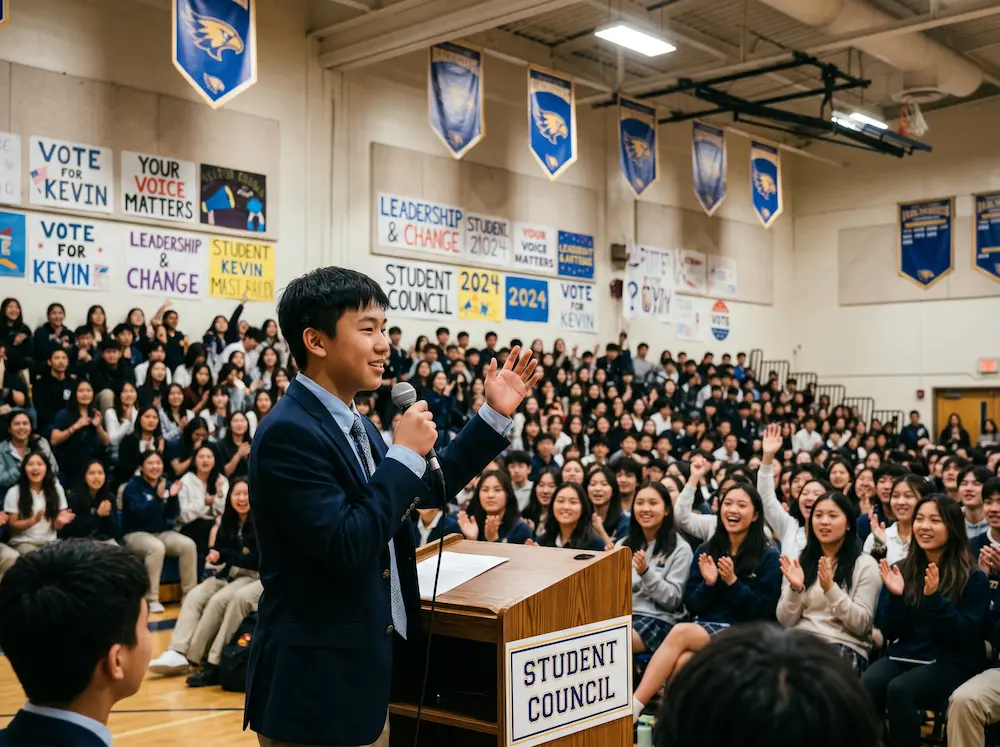
Singapore's education system places real demands on spoken communication. PSLE Oral examinations have been updated to reward thoughtful, articulate responses. Secondary school and JC students are assessed on presentations and debates. The DSA pathway specifically selects for students who can communicate their ideas and interests clearly.
Beyond academic assessment, the ability to speak in public shapes how your child is perceived by teachers, peers, and eventually employers. Children who can express themselves clearly tend to participate more, take more initiative, and build stronger relationships.
These habits are built over time. They are far easier to develop at age 9 or 11 than at age 15, when self-consciousness and academic pressure are both higher.
2. What good public speaking coaching for kids looks like
Not all public speaking programmes are the same. Here is what separates programmes that build lasting communication skills from those that simply prepare children for a single performance.
Small group sizes
Speaking confidence is built through repetition and feedback. In a group of 15 children, each child might speak for five minutes over a 90-minute class. In a group of 8, they speak for 15 minutes or more. That difference compounds over a term. Look for programmes with a maximum of 8 to 10 children per class.
Structured frameworks, not scripts
Memorised speeches are a starting point, not a destination. The goal is to help your child structure their thinking and express ideas clearly in real time. Look for programmes that teach a thinking framework, not just a script to practise.
At SuperMinds, we use structured speaking frameworks developed specifically for children. They are simple enough to remember under pressure and practical enough to use in any real situation: a class presentation, an oral exam, a DSA interview, or a conversation that matters. Once a child has internalised a framework, they stop searching for what to say next and start focusing on how to say it well.
Video feedback
Children improve fastest when they can see themselves. Video review makes progress visible and gives specific, actionable feedback on eye contact, posture, pace, and vocal clarity. This is standard in every SuperMinds class.
A coach, not just a teacher
The difference between a child who learns to speak and a child who learns to speak well often comes down to the relationship with their coach. Look for a programme led by practitioners with real coaching experience, not just a syllabus.
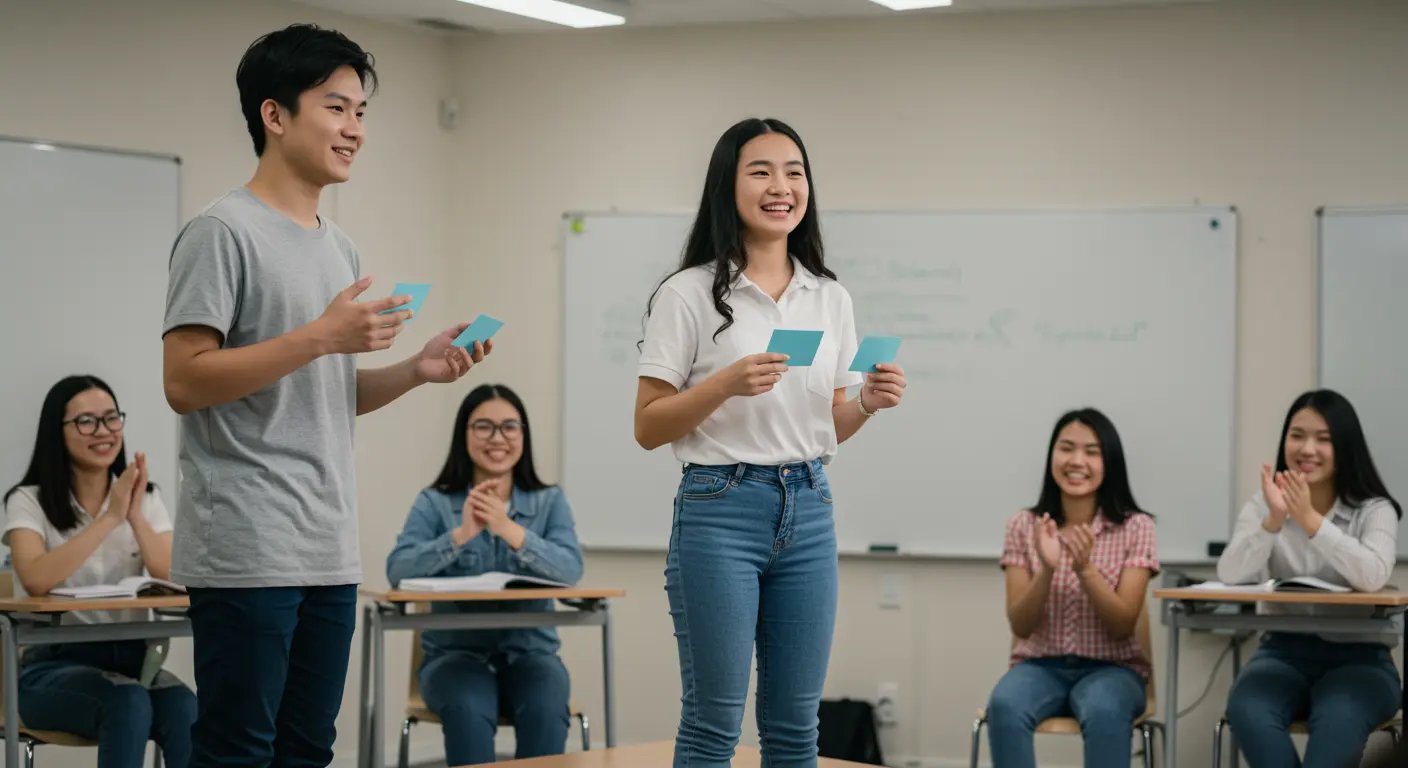
This is exactly how our public speaking classes for kids are run. If you would like to see it firsthand, most families start with a trial class for S$59.50, which includes a video recording and a written coach evaluation.
3. Common concerns Singaporean parents have about public speaking for kids
My child is very shy. Will this help?
Yes. In fact, many of the children who make the most noticeable progress at SuperMinds start as the quietest ones in the room. Shyness is not a barrier to developing communication skills. It is often the reason a child needs structured practice most.
Our approach does not push children to perform before they are ready. We build from structured pair activities to small group sharing to whole-class speaking. The progression is gradual and confidence-led.
My child is already quite outgoing. Would they benefit?
Yes, but for different reasons. Outgoing children are often fluent but not necessarily structured or precise. Many benefit significantly from learning to organise their ideas, slow down, and listen as well as they speak.
At what age should we start?
Our programmes are designed for children aged 9 and above. For most children, Primary 3 or 4 is the right time to begin. They have enough language, experience, and self-awareness to engage meaningfully with structured speaking practice and see real progress term on term.
If your child is approaching PSLE or DSA, starting now is worthwhile. The skills are genuinely teachable at any age.
4. What children learn at SuperMinds
Every SuperMinds programme is built around three pillars: Character. Communication. Confidence.
Character is developed through content that matters. We do not ask children to practise speeches about abstract topics. We ask them to share their real opinions, experiences, and ideas on things they care about.
Communication is developed through our structured speaking frameworks and regular practice in formats that mirror real-life demands: presentations, debates, impromptu speaking, and conversation.
Confidence is built through repetition, video feedback, and a classroom environment where every child is encouraged to take risks and improve.
Our programmes are available as weekly classes, holiday camps, and specialist workshops for PSLE Oral and DSA preparation.

5. About SuperMinds
SuperMinds is Singapore's communication specialist for children and teens aged 9 to 17. Best known for public speaking, we help young people find their voice, think clearly under pressure, and speak with confidence.
The method was pioneered by Iwan Yang, Founder & Programme Director of SuperMinds. Iwan is Singapore's most reviewed communication trainer, with more than 500 five-star reviews and 3,000+ students coached personally across Singapore and Asia.
Every SuperMinds class is led by a trained coach working under Iwan's method and supervision, in small groups of up to 8 children. DSA interview preparation is coached by Iwan directly.
SuperMinds is located at 250 Tanjong Pagar Road, St Andrew's Centre, #04-01, Singapore 088541. Near Tanjong Pagar MRT. WhatsApp: +65 6602 8262. superminds.com.sg
6. Frequently asked questions
How long before my child sees improvement?
Most children show noticeable change within 4 to 6 classes. You will typically see improved structure in how they answer questions, more consistent eye contact, and greater willingness to speak up.
Do children perform in front of an audience?
Not in regular weekly classes. Practice happens within the small group environment. For those who want performance experience, we offer showcase events at certain points in the year, but these are never compulsory.
Will this help with PSLE Oral?
Yes. The PSLE Oral examination assesses reading aloud fluency, personal response, and conversation. All three are directly practised in SuperMinds classes. Children who attend regularly are typically well-prepared for the oral component.
What is the difference between your weekly classes and holiday camps?
Weekly classes are where real skill development happens. Over a term, children build speaking habits through consistent practice, structured feedback, and progressive challenge. The growth is cumulative and visible.
Our holiday programme is a little different. The SuperMinds 3-Day Confidence, Social Skills and Leadership Camp is not a public speaking camp. It focuses on the inner foundations: how your child carries themselves, connects with others, and steps up in a group. Three days in a fun, low-pressure environment at an age when children are still open to trying new things and discovering what they are capable of.
For many families, the camp is the natural starting point. A child who feels more settled in themselves and more comfortable in a group will get far more out of weekly speaking classes when they join. Some children move straight from the camp into the weekly programme. Others simply carry the memory of having stepped forward, spoken up, and surprised themselves.
Is SuperMinds aligned with the Singapore curriculum?
Our content is designed with the Singapore context in mind, and the speaking skills we develop are directly applicable to the PSLE Oral, DSA interview, and school presentations. However, we are an independent enrichment provider and not affiliated with MOE.
7. The next step
Every SuperMinds class begins with a trial. You will receive a video recording of your child speaking and a written evaluation from a SuperMinds coach, so you can see exactly where your child is today and what to work on next.
Book a trial class: S$59.50. WhatsApp +65 6602 8262 or book at superminds.com.sg.
250 Tanjong Pagar Road, St Andrew's Centre, #04-01, Singapore 088541. Near Tanjong Pagar MRT.