
You want your child to speak up. Not just in class, but in life. To raise a hand, share an idea, and hold their ground when someone disagrees.
Most parents think that starts with confidence. It does not. Confidence is the result, not the starting point. It grows out of two things sitting underneath it: character and communication.
At SuperMinds, these three form one method. We call them the 3 Cs: character, communication and confidence. Here is what each one means, why the order matters, and how they work together to help your child find their voice.
1. What the Three Cs Actually Mean
The 3 Cs are the SuperMinds method: character, communication and confidence. Character is who your child is, their honesty, their courage, and how they treat other people. Communication is the skill of expressing that clearly. Confidence is the quiet self-belief that grows once the first two are in place.
Most enrichment classes chase one C at a time. A drama class polishes delivery. A motivation workshop lifts confidence for a week. The three only hold when they are built together, and in the right order.
2. Why Confidence on Its Own Falls Apart
Confidence you can switch on for a stage is easy to fake and quick to fade. A child can memorise a speech, deliver it well, then freeze the moment a teacher asks an unscripted question.
Real confidence works differently. It does not come from being told "you can do it". It comes from evidence: your child tried something hard, handled it, and knows they can do it again.
That is why we never start with confidence. We build the things that earn it.
3. Character Comes First
Character is the foundation because it decides what your child actually has to say. A child who listens, tells the truth, and cares about getting it right will always have something worth sharing.
Picture two children planning a short talk together. One keeps interrupting. The lesson is not about who talks loudest. It is about listening first, then building on a partner's idea. That is character, practised out loud.

Courage lives here too. Speaking up when you disagree, or admitting you got something wrong, takes more than technique. It takes character.
4. Communication Makes Character Visible
Good character stays hidden if a child cannot express it. Communication is the bridge between what your child thinks and what the world actually hears.
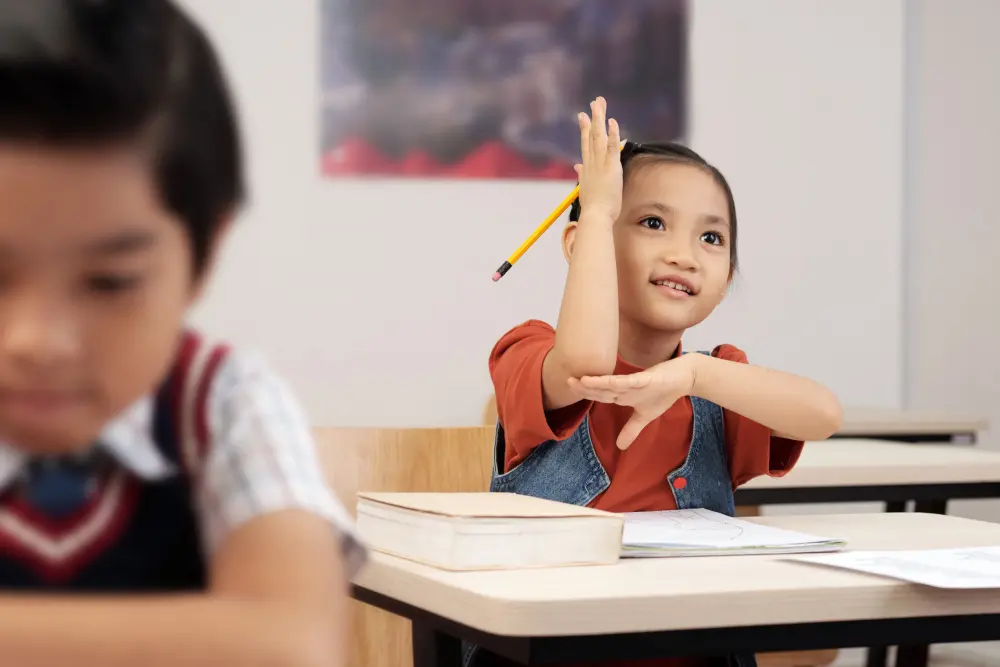
A thoughtful child often sits on a strong opinion because raising a hand feels risky. We give them the tools to close that gap: how to open, how to structure a point, how to hold eye contact and keep going when the nerves arrive.
This is not performance. SuperMinds develops authentic communicators, not performers reciting a memorised script. The goal is a child who can think and speak at the same time, in class, at home, and in an interview.
5. How the SuperMinds Method Builds All Three Together
Every session touches all three Cs, never one in isolation. Your child practises a real skill (communication), inside an activity that asks them to listen, lead, or tell the truth (character), and walks out having done something they were not sure they could do (confidence).
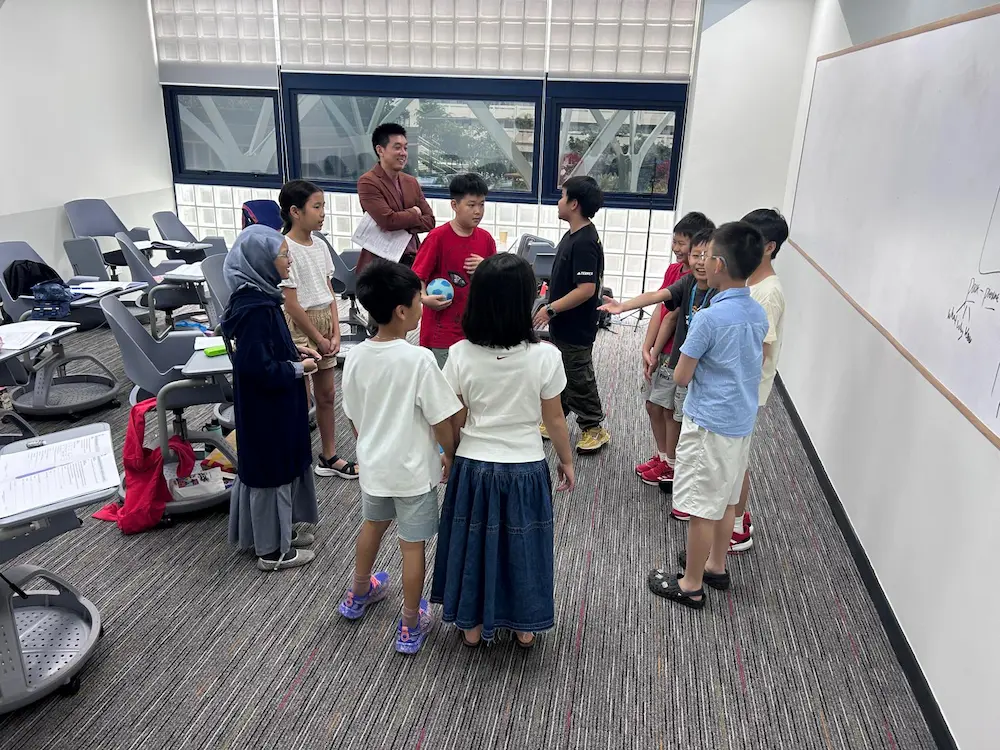
Classes stay small, capped at 8 students, so every child speaks in every session. Repetition is the point. Confidence is built one small win at a time, week after week.
The method was pioneered by Iwan Yang, Founder & Programme Director and Singapore's most reviewed communication trainer. After years coaching working professionals, he created SuperMinds for children and teens when his adult students asked him to train theirs.
6. What the Three Cs Look Like in a SuperMinds Class
A typical class is a small group led by a trained SuperMinds coach. Children speak, get specific feedback, and try again the same day. No child sits at the back and hides.

You might see a Primary 4 student give a one-minute impromptu talk, then a Secondary 1 student chair a short debate. Different ages, the same three Cs. Our public speaking classes for kids and classes for teens follow the same method, pitched to each stage.
The change shows up at home. Parents tell us their child starts volunteering answers, negotiating more calmly, and presenting a school project without the usual dread. If your child holds back today, our guide on building confidence in a shy child is a good next read.
About SuperMinds
SuperMinds is Singapore's communication specialist for children and teens aged 9 to 17. Best known for public speaking, we help young people find their voice: the confidence to speak up, lead, and succeed in school and in life.
We are not a speech and drama class or an elocution course. We build character, communication and confidence together, so the skills hold up in a real classroom, a real interview, and a real conversation. Classes are led by trained SuperMinds coaches working under Iwan's method and close supervision.
You can see the method in a single session. A trial class is S$59.50 and includes a video recording of your child speaking plus a written coach evaluation. Book a trial class to start.
Frequently Asked Questions
What are the 3 Cs at SuperMinds?
The 3 Cs are character, communication and confidence. Character shapes what your child has to say, communication lets them say it clearly, and confidence is the self-belief that grows once both are in place.
Is this a public speaking class or a character course?
Both, by design. SuperMinds teaches public speaking as the visible skill while building the character and confidence underneath it. The three are trained together in every session.
What ages is the SuperMinds method for?
Children aged 9 to 12 (P3 to P6) and teens aged 13 to 17 (Sec 1 to 4). The method stays the same, pitched to each stage.
How is this different from speech and drama?
Speech and drama focuses on performance and scripted delivery. SuperMinds develops authentic communicators who can think and speak in real, unscripted situations, from class discussions to DSA interviews.
How much is a trial class?
A trial class is S$59.50. It includes a video recording of your child speaking and a written evaluation from the coach, so you can see exactly where they are and how they can grow.
How do I know if my child would benefit?
If your child has good ideas but holds back, freezes when put on the spot, or struggles to disagree calmly, the 3 Cs method is built for them. A trial class is the simplest way to find out.
Every confident speaker started somewhere. Give your child character, communication and confidence, built together, and watch them find their voice. Book a trial class for S$59.50.