


Your teenager has plenty to say at home. Put them in front of a class, a panel, or a room of peers, and the words dry up. If that sounds familiar, you are not alone, and your teen is not broken.
Public speaking for teenagers is a skill, not a personality trait. The confident teen at the front of the room was rarely born that way. They practised. This guide explains why speaking feels harder in the teenage years, what real confidence actually looks like, and how you can help your 13 to 17 year old build it in a way that lasts.
1. Why Public Speaking Feels Harder for Teenagers
2. What Real Confidence Actually Means (and What It Isn't)
3. The Skills Behind Every Confident Teen Speaker
4. How Teenagers Build Public Speaking Confidence
5. Where It Pays Off: Oral Exams, DSA, CCA and Beyond
1. Why Public Speaking Feels Harder for Teenagers
Something changes around age 13. The child who once sang at every family gathering suddenly hates being watched. This is not defiance. It is development.
Adolescence rewires the brain to care intensely about what peers think. Teenagers become acutely self-aware, and the fear of judgement can feel physical. Standing up to speak puts every one of those fears in one place, in front of the exact audience they most want to impress.
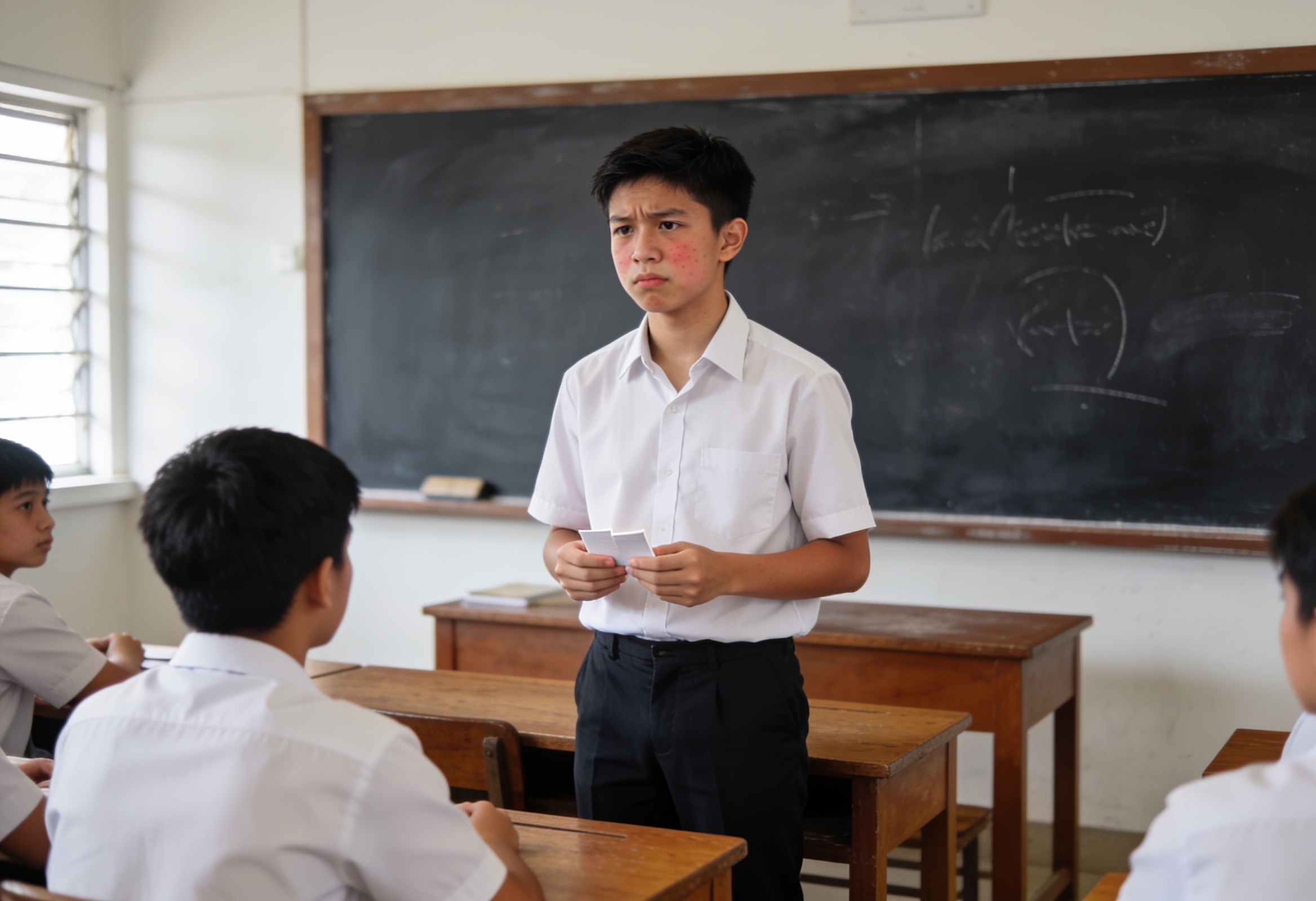
Public speaking feels harder for teenagers because their sensitivity to peer judgement is at a lifetime high. The good news is that this response is normal, and it is trainable. With the right kind of practice, teens can teach their nervous system that speaking up is safe.
In Singapore, the stakes rise even further. Oral exams, class presentations, and interviews arrive just as self-consciousness peaks. That is why so many capable teens go quiet at the worst possible moment.
2. What Real Confidence Actually Means (and What It Isn't)
Real confidence is not loudness. It is not being the most extroverted person in the room. Some of the most compelling speakers are quiet, thoughtful teenagers who have learned to trust their own preparation.
Confidence is the calm that comes from competence. It is built, not faked. A teenager who has rehearsed, received honest feedback, and spoken many times knows what to expect, and that knowledge is what steadies the voice.
This matters because telling a teen to fake it rarely works. Bravado cracks under pressure. What lasts is the quiet certainty that says, I have done this before and I can do it again. SuperMinds develops authentic communicators, not performers reciting a memorised script, because earned confidence is what holds up in a real oral exam or interview.
3. The Skills Behind Every Confident Teen Speaker
Confidence looks like one thing, but it rests on several learnable skills. Break it down and it stops being a mystery.
Structuring ideas so a point lands clearly. Managing nerves through breathing and pacing. Holding eye contact and steady body language. Speaking with vocal clarity instead of rushing. Handling unexpected questions without freezing. Reading the room and adjusting.
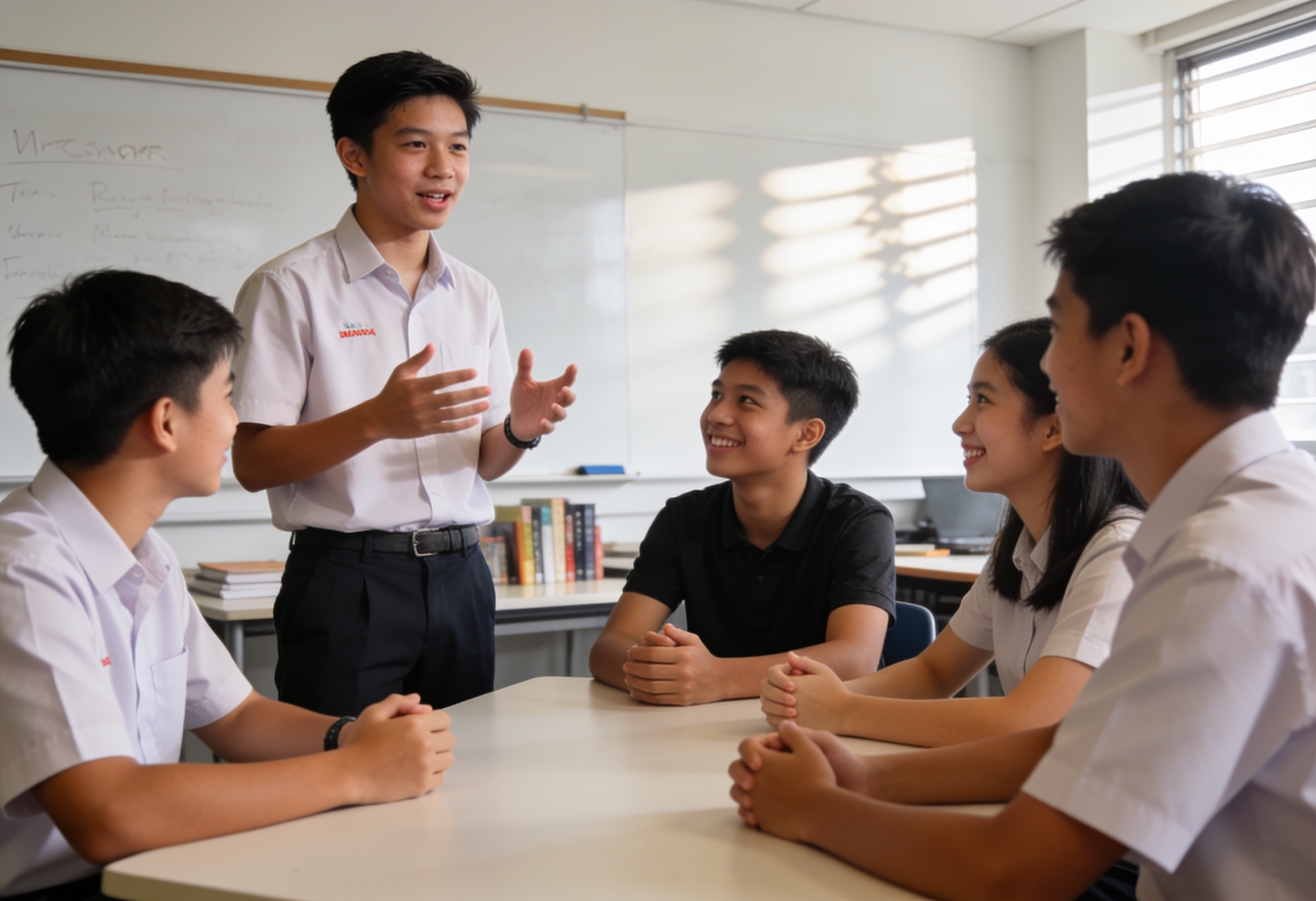
None of these are personality traits. They are techniques, and teenagers pick them up quickly once someone shows them how and gives them room to practise. This is what strong communication skills for teens look like in practice.
4. How Teenagers Build Public Speaking Confidence
Teenagers build public speaking confidence the same way they build any skill: through small, frequent, low-stakes repetition in a place where mistakes are safe.
The pattern that works is simple. Speak often, start small, get specific feedback, then try again. One nerve-wracking presentation a year teaches almost nothing. Weekly practice in a supportive group teaches a great deal.
What you do at home helps too. Ask your teen for their opinion at dinner and let them make the case. Have them present the plan for a family outing. Resist the urge to rescue them mid-sentence. Let the pause sit, and let them find the word.
For the wider picture at this stage, our guide to communication skills for teens in Singapore covers more ground. When your teen is ready for structured practice with a coach, our public speaking classes for teens give them a stage every week.
5. Where It Pays Off: Oral Exams, DSA, CCA and Beyond
Public speaking is not a hobby skill. For a Singapore teenager, it shows up in the moments that shape their path.
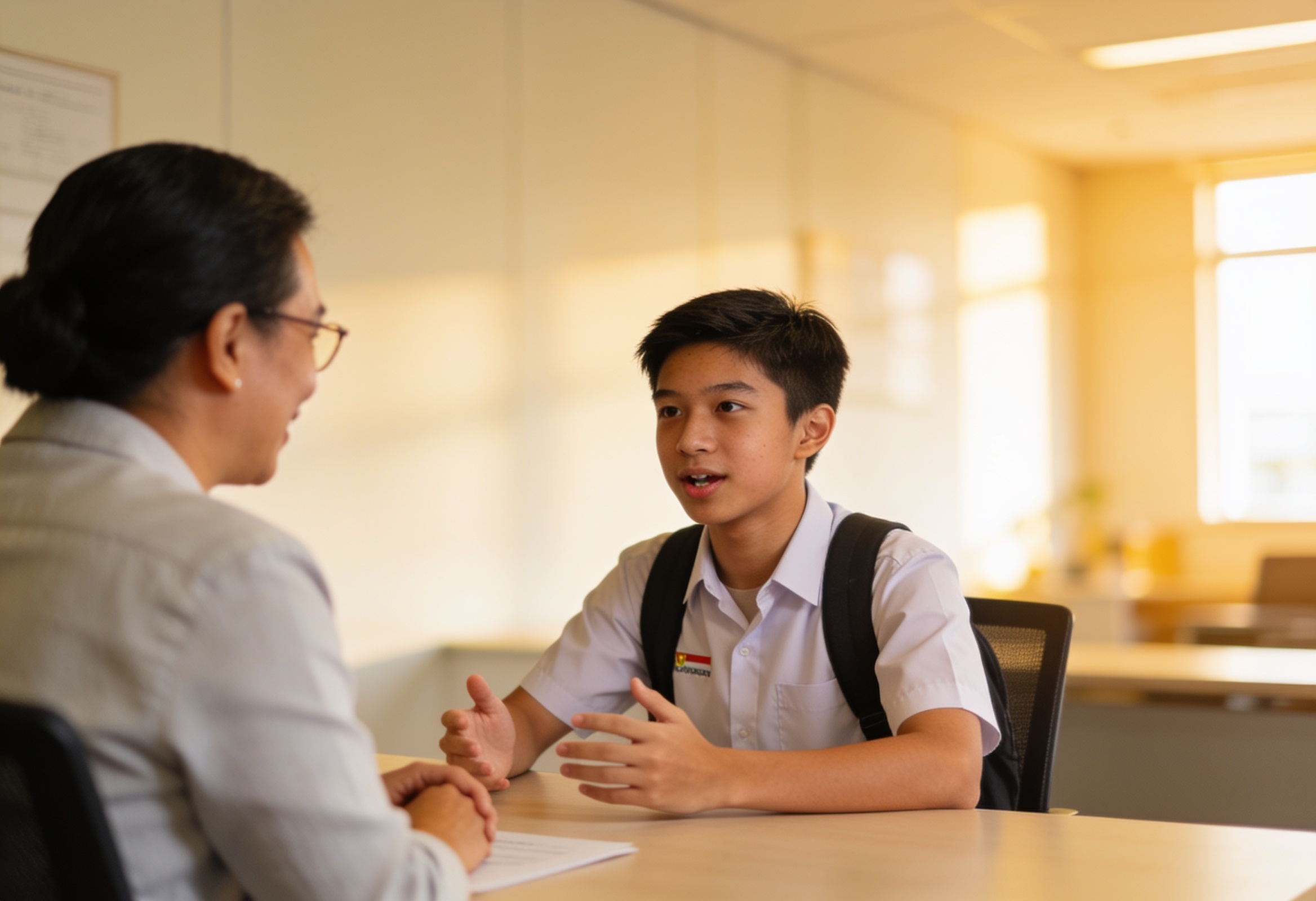
Secondary oral examinations reward students who speak clearly and think on their feet. DSA and DSA-JC interviews ask teens to talk about themselves with warmth and conviction. CCA leadership roles go to those who can address a group. Scholarship and university interviews turn on the same skill.
Beyond school, it compounds. The teenager who can present an idea, chair a discussion, or answer a hard question with composure carries that advantage into national service, work, and adult life. The habit you build now pays out for decades.
6. How SuperMinds Helps Teens Find Their Voice
SuperMinds is Singapore's communication specialist for children and teens aged 9 to 17. Best known for public speaking, we help young people find their voice: the confidence to speak up, lead, and succeed in school and in life.
The SuperMinds method was pioneered by Iwan Yang, Founder & Programme Director and Singapore's most reviewed communication trainer. After years coaching working professionals, he created SuperMinds for children and teens when his adult students asked him to train theirs, bringing proven communication training to younger learners. Classes are led by trained SuperMinds coaches working under Iwan's method and close supervision.
Our teens programme is built for ages 13 to 17 (Sec 1 to 4). Classes stay small, capped at 8 students, so every teen speaks and gets feedback every session. We are based at 250 Tanjong Pagar Road, St Andrew's Centre, #04-01, a short walk from Tanjong Pagar MRT.
The best first step is a trial class. For S$59.50, your teen speaks, receives a video recording of their session, and gets a written evaluation from their coach. Book a trial class and see what changes when your teenager is given the room to speak.
7. Frequently Asked Questions
At what age should a teenager start public speaking classes?
Any point from 13 to 17 works well. Earlier is easier, because habits form faster before exam pressure peaks, but it is never too late. A Secondary 3 or 4 student preparing for interviews benefits just as much as a Secondary 1 student starting out.
My teen is an introvert. Can they still become a confident speaker?
Yes. Confidence is not the same as extroversion. Introverted teens often become thoughtful, precise speakers once they learn the techniques. The goal is not to change your teen's personality. It is to give them control over how they come across.
How is public speaking different from speech and drama?
Speech and drama focuses on performance and acting. Public speaking at SuperMinds focuses on real-world communication: presenting ideas, answering questions, and speaking with clarity under pressure. We help your teen become an authentic communicator, not someone reciting lines on a stage, so the skills carry into exams, interviews, and daily life.
How long before my teenager becomes more confident?
Most teens feel a difference within a few weeks of regular practice. Lasting confidence comes from months of repetition. Because our classes meet weekly and stay small, every teen speaks often, which is what accelerates progress.
Do public speaking skills help with school exams and DSA interviews?
Directly. Oral examinations, DSA and DSA-JC interviews, and scholarship interviews all test how clearly and confidently a student speaks. The same skills that make a teen a strong speaker make them a stronger candidate in every one of those settings.
Ready to help your teenager find their voice? Book a trial class for S$59.50 and give them a place to practise, week after week.