

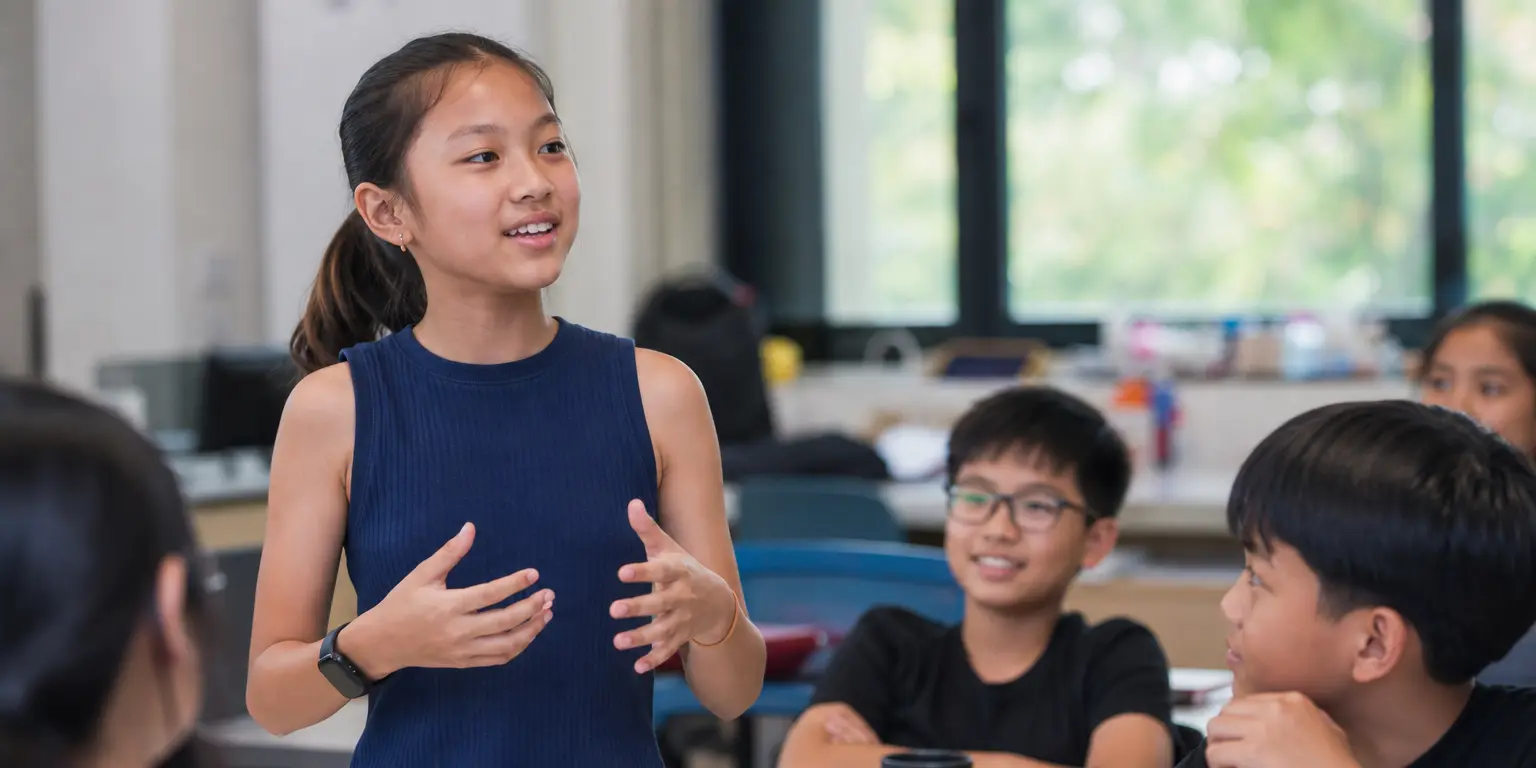
You're looking at a list: coding, swimming, piano, more tuition, or public speaking. One free Saturday morning. One more activity this term. Every option promises to help your child. Only one of them is the skill that pays off in everything else your child does too.
LinkedIn's 2024 Global Talent Trends report ranked communication as the single most in-demand skill among employers, ahead of technical ability, for the second year running. That's a strange stat to read while planning a 9-year-old's weekend, but it points to something real. Public speaking doesn't replace coding, sport, or music. It sits alongside them and quietly makes each one work better.
This isn't a case for one class over another. It's an honest look at why some skills compound and others stay contained, what the research says about choosing a skill before your child knows their passion, and where public speaking actually shows up once you stop picturing it as a stage.
1. Why Some Skills Pay Off More Than Others
2. It's Not Just About Standing on a Stage
3. You Don't Need to Know Their Passion Yet
4. Why Communication Consistently Comes Out on Top
5. The Skill That Multiplies Whatever They're Good At
6. Why This Matters Even More in a Screen-First Childhood
7. Public Speaking vs Other Popular Enrichment Choices: A Side-by-Side Look
1. Why Some Skills Pay Off More Than Others
Some skills stay where you put them. A child who learns to swim becomes a better swimmer. A child who learns piano becomes a better pianist. These are valuable, contained skills: they pay off in one lane, and they pay off well.
Other skills spread. They show up in places you didn't enrol your child for. Public speaking is one of them. A child who learns to structure an argument, hold eye contact, and explain an idea clearly doesn't just get better at speeches. They get better at answering the teacher's question in class, at negotiating screen time, at working through a disagreement with a friend without shutting down.
Picture two 10-year-olds who both love science. One can explain, out loud, why an experiment worked and answer a follow-up question on the spot. The other understands the concept just as well but freezes when asked to explain it to the class. Both know the same amount of science. Only one of them can turn that knowledge into a grade, a science fair placing, or a teacher's confidence in them.
This is the real difference between a contained skill and one that pays off in everything else your child does: whether the skill transfers. Communication transfers because almost everything your child will do, in school, at home, in a future job, runs through their ability to express a thought and be understood.
That doesn't make coding or sport or music a waste of time. It makes public speaking the layer underneath them. A confident, articulate child gets more out of every other activity on the list, because they can ask better questions in the coding class, advocate for their position on the team, and explain what they're learning in music instead of just performing it.
This is the lens worth applying to any enrichment decision: not "what does my child enjoy right now," but "what skill makes everything else they do work harder for them."
2. It's Not Just About Standing on a Stage
Here's the misunderstanding that stops a lot of parents from even considering public speaking: they picture a stage, a spotlight, and a child who either loves performing or doesn't. If your child isn't a natural performer, public speaking looks like the wrong fit.
That picture is incomplete. Public speaking, taught well, has very little to do with performance and almost everything to do with thinking clearly under pressure and communicating that thinking to another person. At SuperMinds, the teens curriculum covers structuring an argument so it holds up, commanding a room without raising your voice, thinking on your feet when a question catches you off guard, reading how a listener is reacting and adjusting, persuading someone who disagrees with you, and holding a real conversation when the pressure is on. None of that requires a spotlight.

Think about where a teenager actually uses these skills: explaining to a teacher why they need an extension, standing their ground in a group project when someone else wants to cut corners, answering a DSA interviewer's follow-up question they didn't prepare for, or simply holding their own in a family conversation about a decision that affects them. None of these are stages. All of them are public speaking.
Consider a 12-year-old who dreads oral presentations but loves building intricate Lego models. Traditional public speaking classes that focus purely on performance would ask this child to perform confidently, which misses the point entirely. The more useful version of this skill is asking them to explain, clearly and persuasively, why their build works: what problem it solves, why they made the choices they did. That's public speaking. It just doesn't look like a stage.
The quieter, more introverted child often benefits the most from this reframe, not despite being quiet, but because of it. They're not being asked to become someone louder or more theatrical. They're being taught to organise a thought and deliver it with enough clarity that people listen, which is a completely different skill from performing.
Once you separate public speaking from performance, it stops competing with your child's personality and starts working with it.
3. You Don't Need to Know Their Passion Yet
Plenty of enrichment advice assumes you already know what your child is good at, and that your job is to double down on it. Spot the passion early, then invest in it. It's tidy advice, and it doesn't match how most children actually develop.

Psychologist Donald Super's research on vocational development, first published in 1953 and still widely referenced in career development theory, describes adolescence as a period of "crystallization": a stage where interests are actively forming, not yet fixed. Most children genuinely don't know what they'll be passionate about at 9, 12, or even 15. That's not a gap in your parenting. It's typical development.
This also means there's no perfect moment you're supposed to catch. Parents sometimes worry they've already missed the window: their child hasn't shown a clear interest in anything by Primary 5, and every other parent seems to have already picked a lane. Crystallization research suggests otherwise. Interests typically continue forming through the early teenage years, sometimes later. Investing in a transferable skill now doesn't lock your child into anything. It just means that whenever their interest does show up, they'll be ready to run with it.
This is where the passion-uncertainty most parents feel stops being a problem to solve and becomes a reason to choose differently. If you can't yet know whether your child will fall in love with robotics, debate, art, or sport, the smartest move isn't to guess and hope. It's to invest in the skill that helps them succeed at whatever they eventually choose.
Communication is that skill. Whatever your child ends up passionate about, they'll need to explain it, pitch it, defend it, or teach it to someone else. The child who discovers a love of science at 14 still needs to present findings clearly. The child who falls into leadership on a sports team still needs to rally teammates with words, not just performance.
So if you're waiting to "spot the passion" before deciding what to invest in, you can stop waiting. Give your child a head start on the one skill that will serve whatever they choose, and let the passion reveal itself on its own time.
4. Why Communication Consistently Comes Out on Top
Parents don't need to take this on faith. Ask employers, economists, and education ministries what skill matters most, and communication keeps coming out ahead.
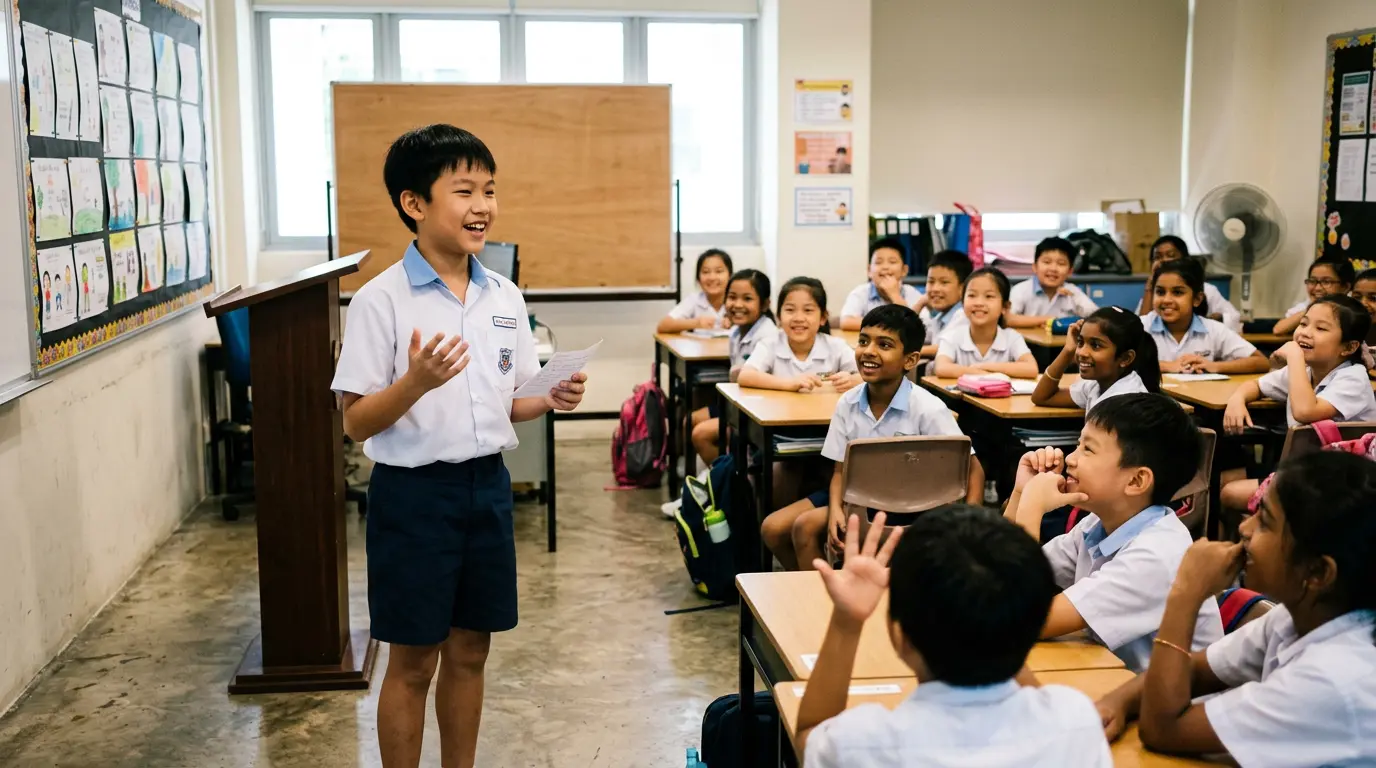
LinkedIn's 2024 Global Talent Trends report, covered by Forbes, ranked communication as the single most in-demand skill among employers that year, ahead of every technical skill on the list. This wasn't a one-off finding. The World Economic Forum's Future of Jobs Report 2025 places skills like leadership and social influence among the fastest-growing skill demands globally, even as technical fields evolve rapidly around AI. The employers hiring your child's future self are consistently pointing at the same thing.
Singapore's own education system has reached a similar conclusion from a different direction. The Ministry of Education's 21st Century Competencies framework names effective communication as one of the core competencies every student should develop, alongside critical thinking and civic literacy. This isn't a private school marketing angle. It's built into how Singapore defines a well-prepared student, from the PSLE oral through to Secondary school group projects and beyond.
What ties these together is worth sitting with. A hiring manager evaluating a 25-year-old, an economist tracking global job trends, and a ministry designing a national curriculum all arrived at the same answer through completely different questions. That's not a trend. That's a signal.
You can see this play out locally too. Students who communicate clearly perform better in the PSLE oral component, present themselves more convincingly in DSA interviews, and carry that same clarity into secondary school leadership roles and CCA responsibilities. The skill that ranks first in global hiring data is the same one showing up in your child's Primary 6 report book.
For a parent weighing options today, this doesn't mean the other choices don't matter. Coding is genuinely useful. Sport builds discipline and health. Music builds discipline and listening. But if you're asking which single skill shows up across every one of those domains, the evidence points to communication, and it points there consistently enough that it's worth treating as a priority rather than an afterthought.
5. The Skill That Multiplies Whatever They're Good At
Here's the part most parents haven't considered: communication doesn't just sit alongside your child's other skills. It multiplies them.
Economist James Heckman's research on soft skill formation, published through the National Bureau of Economic Research, found that non-cognitive skills like communication don't just add value on their own. They compound the returns on other skills a person already has. A talented young coder who can explain their thinking clearly gets more out of every mentor, every team project, and every interview than an equally talented coder who can't. The talent doesn't change. What it produces does.
There's a second, more personal way this multiplication happens: through teaching. A 2014 study by cognitive psychologists Nestojko, Bui, Kornell, and Bjork, published through Washington University in St. Louis, found that students who expected to teach material to someone else understood and retained it more deeply than students studying purely for a test. The act of preparing to explain something forces a level of clarity that passive learning doesn't demand.
This is where public speaking becomes something bigger than a standalone skill. A child who is good at football and can also explain a play clearly can coach a younger teammate. A child who loves art and can also present an idea persuasively can pitch a mural project to their school. A child who is strong in science and can also hold a room's attention can lead a project group instead of just contributing to one.
You can see this multiplier at work in small, everyday moments too. A child who plays club-level tennis and can also explain strategy clearly becomes the teammate coaches turn to when a newer player needs guidance. That's not a coincidence. It's the direct result of pairing a skill with the ability to communicate it.
Whatever your child ends up good at, and whenever they end up discovering it, communication is what lets them teach it, share it, and lead with it. It's the difference between being good at something quietly and being able to bring other people along with you. That's not a small add-on to a talent. It's what turns a talent into influence.
6. Why This Matters Even More in a Screen-First Childhood
The multiplier effect above shows up in grades and interviews. It shows up somewhere quieter too. Psychologist Jean Twenge's research tracked millions of US teens since the 1970s and found daily in-person time with friends fell from 52% of 12th-graders to 28% by 2017, right as smartphones took over. Loneliness moved the opposite way, from 26% to 39% over the same years.
It isn't the screen time itself that predicts the harder outcomes. A PLOS ONE study of adolescents aged 11 to 21 found the real risk factor wasn't the feelings themselves, but not having the words for them. The gap wasn't the emotion. It was the vocabulary.
This is what public speaking training builds, and it was never about performing. It's sitting with a thought or feeling long enough to understand it, then finding the words for it. That combination doesn't develop on its own. A child can think clearly, feel deeply, and still have no idea how to say any of it, without a family or a class that makes room for the words.
A SuperMinds class is built to be that room. Children learn to notice what's going on in their own heads, reflect on the world around them, and practise saying it clearly: to a coach, then a group, then wherever it counts later. It's a pity when a child works something out, has a good idea, or carries a real feeling, and has no way to hand it to anyone.
7. Public Speaking vs Other Popular Enrichment Choices: A Side-by-Side Look
It helps to see this next to the other options actually competing for your child's Saturday morning. None of these are wrong choices, and none of them need to be dropped to make room for public speaking. The real question isn't which one is best. It's what each one gives your child beyond its own lane, and whether it needs communication skill to fully pay off.
Take a child enrolled in a coding class. Without communication training, that child can build something impressive and still struggle to pitch it at a school project showcase, or explain their thinking when a teacher asks a probing question. Add public speaking to the mix, and the same coding skill becomes something the child can present, defend, and get credit for.
The point of this table isn't to talk you out of coding, sport, music, or tuition. It's to show why public speaking sits in a different category. Every other skill on this list gets better when a child can communicate well. Communication doesn't need any of the others to be valuable on its own, but it makes all of them go further.
If your child is already in one or two of these activities, public speaking isn't a competing time slot. It's the multiplier sitting underneath whatever they're already doing. For a fuller look at how every enrichment category compares, see our guide to the best enrichment classes for kids in Singapore.
8. Does This Pay Off at Every Age? Kids vs Teens
Age changes what "paying off" looks like, but it doesn't change whether the skill is worth building.
For children aged 9 to 12, public speaking training tends to pay off in confidence and classroom presence. This is the age of PSLE oral preparation, of raising a hand in class instead of hoping the teacher skips over them, of managing group presentations without freezing up. The earlier a child gets comfortable expressing a thought out loud, the less anxiety builds up around it later.
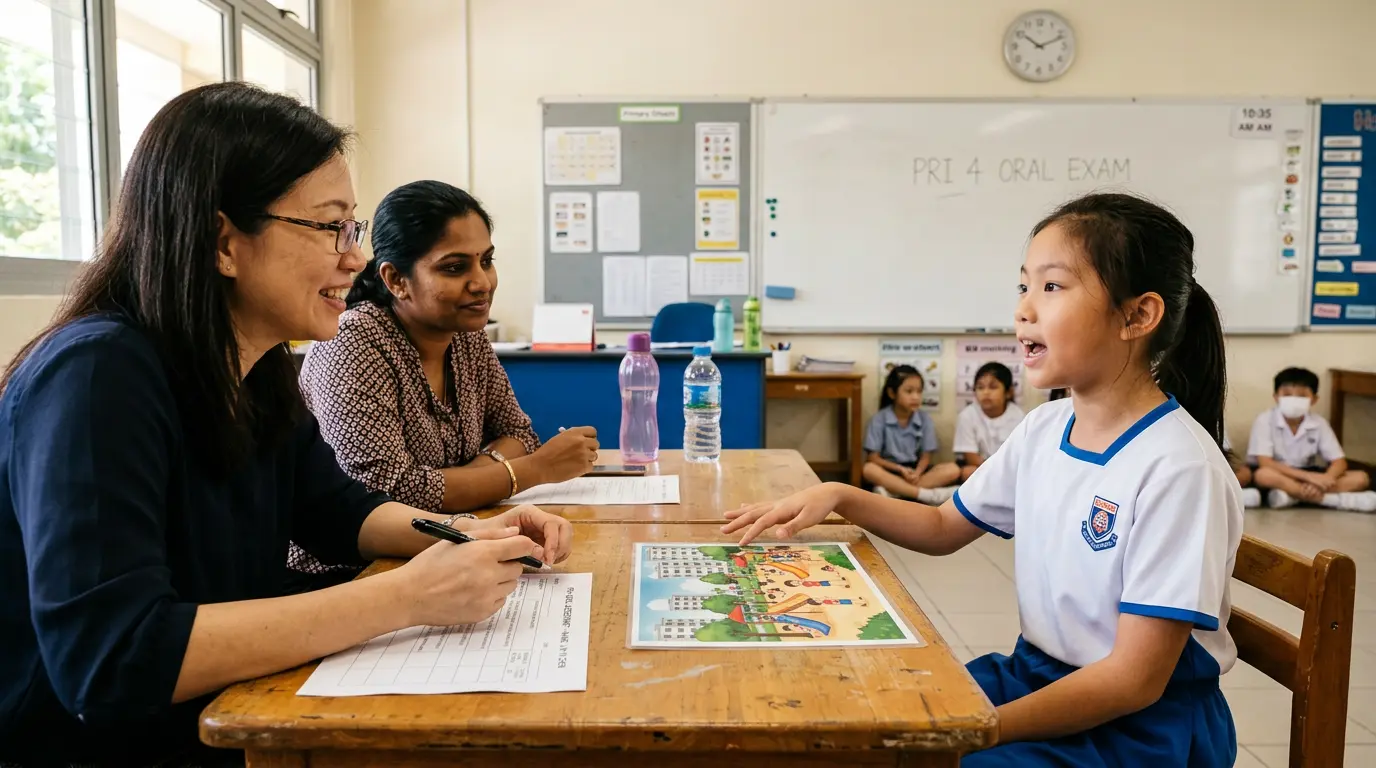
That anxiety is worth taking seriously. Research on adolescent development, including studies reviewed in the National Institutes of Health's peer-reviewed literature, links early practice with structured, supportive speaking opportunities to lower social anxiety later in adolescence. Waiting until the teenage years to address a fear of speaking up means working against years of avoidance instead of building confidence from the start.
For teens aged 13 to 16, the same skill shows up differently. This is the DSA interview stage, the age of group projects with real stakes, the start of thinking about leadership roles, CCA responsibilities, and eventually job interviews. Teens need to do more than speak clearly. They need to structure an argument, hold their position under questioning, and read a room that isn't always friendly. This is a more advanced form of the same underlying skill.
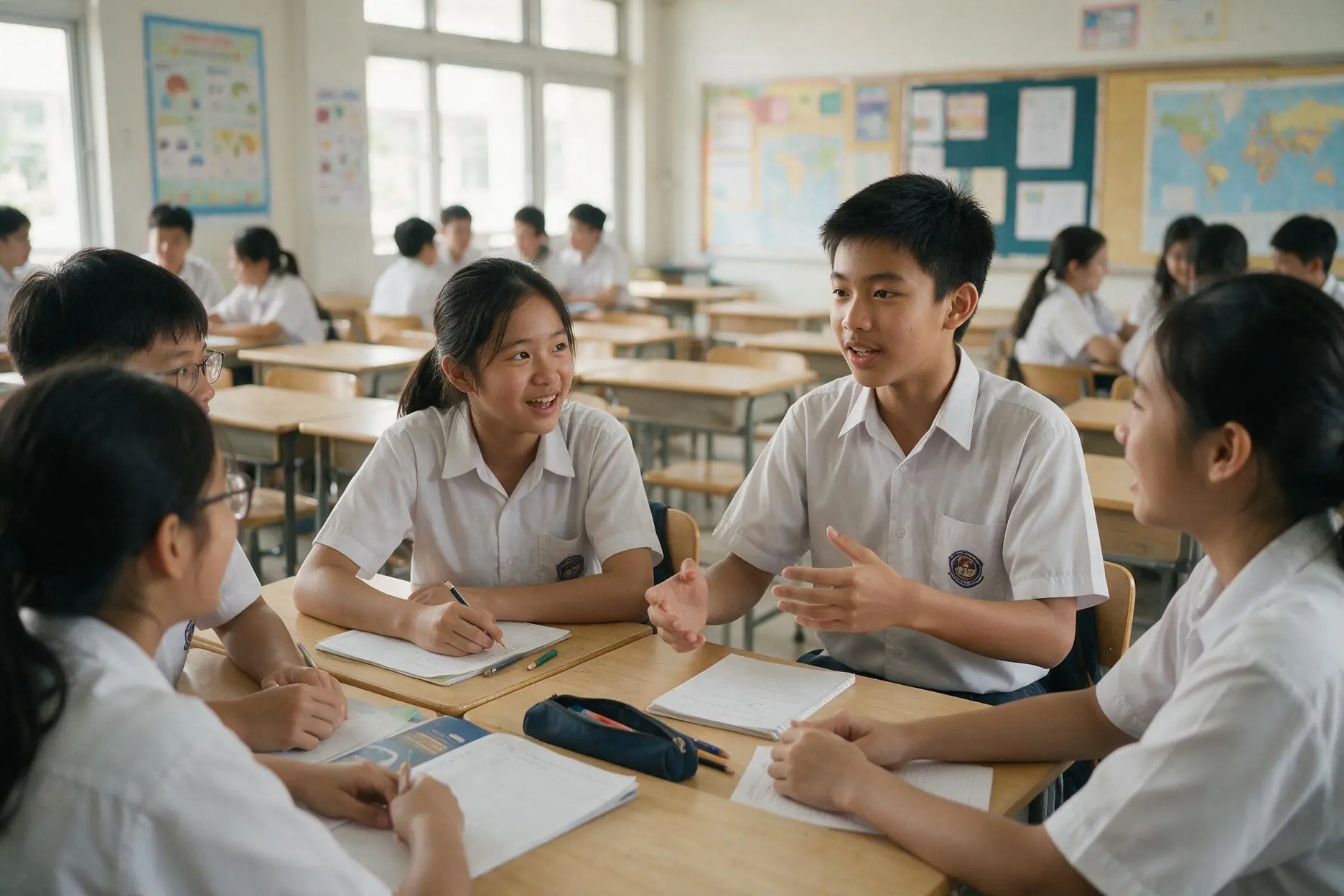
If you're deciding when to start, a useful rule of thumb is this: start building the skill before the stakes are high, not once they are. A 10-year-old practising in a low-pressure class setting has room to make mistakes and recover. A 15-year-old walking into a DSA interview or a school leadership interview for the first time doesn't have that same room. Starting earlier isn't about rushing childhood. It's about giving the skill time to become natural before it's tested.
Neither age is "too early" or "too late." A 9-year-old benefits from building the foundation before the self-consciousness of the teenage years sets in. A 16-year-old benefits from sharpening a skill that will be tested in interviews and leadership moments within the next few years. The skill compounds either way. It just compounds longer the earlier it starts.
9. About SuperMinds
SuperMinds is Singapore's communication specialist for children and teens aged 9 to 17. Best known for public speaking, we help young people find their voice: the confidence to speak up, lead, and succeed in school and in life.
SuperMinds didn't start as a children's programme. Iwan Yang, Founder & Programme Director and Singapore's most reviewed communication trainer, built his coaching method for working adults first at Speak Sell Succeed: professionals who needed to pitch, present, and hold a room with confidence. It was his adult students, watching their own children struggle with the same things they once did, who asked him to bring that method to a younger age group.
That origin shapes how classes actually run. Instead of scripted performances or memorised speeches, sessions are built around real, structured practice: taking a position and defending it, thinking through a question with no prepared answer, adjusting a message when the listener isn't following.

Classes run in small groups of up to 8 students at 250 Tanjong Pagar Road, a short walk from Tanjong Pagar MRT, with a Children's Programme for ages 9 to 12 and a Teens Programme for ages 13 to 16.
Every trial class includes a video recording of your child speaking and a written coach evaluation, so you can see exactly where they're starting from rather than guessing. It's a practical way to answer the question this whole article has been circling: not "will my child enjoy this," but "what will this skill actually do for them." A trial class is S$59.50.
10. FAQ
How do you know if a skill is really worth your child's time?
Look for transfer, not just enjoyment. A skill is worth prioritising when it improves your child's performance in areas beyond the activity itself, the way communication improves how they do in school, in interviews, and in relationships. Enjoyment matters too, but it shouldn't be the only filter.
Does public speaking only help kids who want to perform or compete?
No. Performance and competition are two small applications of a much broader skill. Most of what public speaking training builds, structuring a thought, thinking on your feet, reading a room, holds up in everyday moments like class discussions, group projects, and family conversations.
What if I don't know what my child is passionate about yet?
That's normal, not a gap. Most children's interests are still forming well into their teenage years. Rather than waiting to spot a passion before investing in a skill, choose a skill that will help whatever they eventually choose. Communication is one of the few skills that helps regardless of the direction they take.
Is public speaking really more valuable than skills like coding or sports?
It's not a replacement for coding or sport. It's the skill that helps your child get more out of both, by making it easier to explain what they've built, advocate for their position on a team, or lead a project instead of just contributing to one.
Does communication training actually help academically, or just with confidence?
Both, and they're connected. Confidence to speak up in class leads to more participation, which supports learning. Communication skills also directly support the PSLE oral, group project presentations, and, later, DSA interviews.
Is it too late to start if my child is already a teen?
No. Teens benefit from a more advanced version of the same training: structuring arguments, handling questions under pressure, and leading group discussions. It's a different starting point, not a missed window.
How is public speaking different from performance-based classes like drama?
Drama and speech classes are often built around performing a script or a character. Public speaking training at SuperMinds is built around a child's own thinking: developing, structuring, and delivering their own ideas under real conditions, not memorising someone else's lines.
If you're still deciding what's worth your child's Saturday morning, a trial class is a low-risk way to see what this skill could do for them.