


Compound interest works on money. It also works on communication. A child who learns to speak up clearly at 9 gets a little better each year, and by 17 the gap between them and a child who stayed quiet is enormous.
This guide explains why communication skills for children in Singapore compound the way they do, where the payoff shows up over the next ten years, and why age 9 is the right time to start.
1. What Communication Skills Really Means for a Child
Communication is more than talking. For a child, it is a bundle of linked skills: speaking clearly, listening well, reading a room, organising a thought before saying it, and adjusting when the listener looks lost.
These skills show up everywhere. The child who can explain their thinking in class, ask a teacher for help, settle a disagreement with a friend, or present a group project is using communication. It is the operating system that every other subject and relationship runs on.
Importantly, these are skills, not fixed traits. A quiet child is not a poor communicator by nature. Like reading or swimming, communication is learned through practice, and that is exactly why it compounds.
2. Why Communication Skills Compound
Compounding happens when each small gain makes the next one easier. Communication works this way more than almost any other skill.

Picture a 9-year-old who raises her hand to answer one question. It goes well, so she does it again the next week. Speaking up earns a warm response from her teacher and friends, which builds confidence, which makes her speak up more. Each loop strengthens the next.
This is also how the brain is built. The Harvard Center on the Developing Child describes "serve and return": every back-and-forth exchange a child has helps wire the brain for communication, and these early interactions form the foundation that later skills build on.
The reverse compounds too. A child who avoids speaking gets fewer chances to practise, falls a little further behind each year, and grows more reluctant. The earlier a child starts the positive loop, the more powerful it becomes by the time they are a teenager.
3. The 10-Year Advantage: Where It Pays Off
The returns on communication are not abstract. They land at specific, high-stakes moments across a Singapore child's school years.
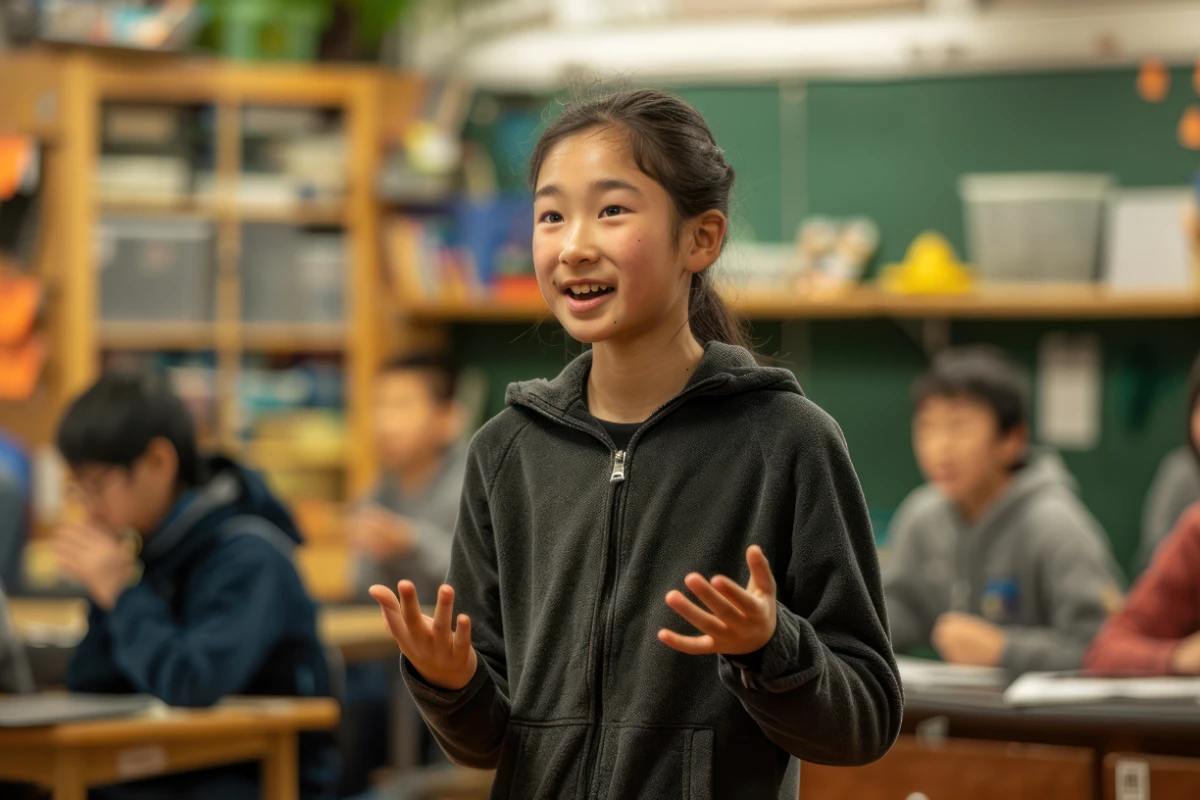
In upper primary, the PSLE oral examination rewards children who can speak clearly and hold a conversation. At the DSA stage, interviews ask children to talk about themselves and think on their feet. Through secondary school and beyond, presentations, group projects, and class discussions all favour the confident communicator. The child who started building these skills at 9 walks into each of these moments already practised.
It matters far beyond exams. Singapore's 21st Century Competencies framework names communication as a core skill for every student, and the World Economic Forum's Future of Jobs Report 2025 ranks communication and social influence among the skills rising fastest in value. The child speaking up in Primary 4 today is building the exact capability their future will reward.
Communication is also the thread through every related skill, from active listening to making a persuasive case and handling feedback.
4. Why Age 9 Is the Ideal Time to Start
Earlier is not always better, and later is not too late, but age 9 sits in a useful sweet spot.
By around Primary 3, children can reflect on their own speaking, take feedback, and practise a skill deliberately rather than just through play. They are old enough to work in a structured group, yet still young enough that habits form easily and self-consciousness has not fully set in.
Starting at 9 also gives the compounding the longest runway before the moments that matter most. A child who begins at 9 has three years of practice before the PSLE oral, and the better part of a decade before university interviews and the working world. Begin the loop early, and time does the heavy lifting.
This is also why SuperMinds starts its programmes at age 9. It is the point where structured communication training begins to compound fastest.
5. How to Build Communication Skills at Home
Parents start the compounding long before any class. A few simple habits, repeated, add up.
Ask open questions. Swap "How was school?" for "What was the most interesting thing that happened today?" Questions that cannot be answered in one word give your child practice at organising a thought.
Let them finish. Resist completing their sentences. The pause while a child finds the right words is where the skill grows.
Give them real speaking roles. Let your child order at the restaurant, call a relative, or explain the plan for the weekend. Small, genuine speaking tasks build confidence that transfers.
Model good listening. Put the phone down and give full attention when they speak. Children copy the listening they receive.
None of this is dramatic. But a child who gets these small reps every day is compounding at home, daily.
6. About SuperMinds
SuperMinds is Singapore's communication specialist for children and teens aged 9 to 17. Best known for public speaking, we help young people find their voice: the confidence to speak up, lead, and succeed in school and in life.
The method was pioneered by Iwan Yang, Founder & Programme Director and Singapore's most reviewed communication trainer, with 3,000+ students coached and 500+ five-star reviews. It began when adults he trained asked him to teach their children the same skills, so the method was proven on adults first, then shaped for young learners. Classes run in groups of no more than 8, led by Iwan and trained SuperMinds coaches.
Because communication compounds, the earlier a child starts, the more they gain. We run classes for children (ages 9 to 12) and classes for teens (ages 13 to 17) at 250 Tanjong Pagar Road, St Andrew's Centre, #04-01, Singapore 088541, near Tanjong Pagar MRT. A trial class is S$59.50 and includes a video recording of your child speaking and a written coach evaluation. WhatsApp us at +65 6602 8262.
7. Frequently Asked Questions
At what age should a child start building communication skills?
Communication grows from birth through everyday conversation, but structured training is most effective from around age 9, when children can reflect on their speaking and practise deliberately. SuperMinds programmes start at 9.
Can communication skills really be taught?
Yes. Communication is a set of learnable skills, including clear speaking, listening, and organising ideas. With regular practice and feedback, any child improves, regardless of natural temperament.
What are the most important communication skills for a child?
Speaking clearly, listening actively, organising a thought before speaking, and adjusting to the listener. Together these let a child be understood and connect with others.
How do communication skills help with PSLE Oral and DSA interviews?
Both reward children who can speak clearly and converse naturally under a little pressure. A child who has practised communication for years handles the oral exam and the interview with far more composure.
My child is shy. Will that hold them back?
Not at all. Shyness is about temperament, not ability. Quiet children often become excellent communicators once they have a safe space to practise; they simply need the repetitions.
How long before I see improvement?
Most parents notice small changes within a few months, such as more willingness to speak up. The larger gains come from consistency over years, which is the whole point of compounding.
The best time to start the compounding was years ago. The second best time is now. Book a trial class for S$59.50 and give your child a head start.