
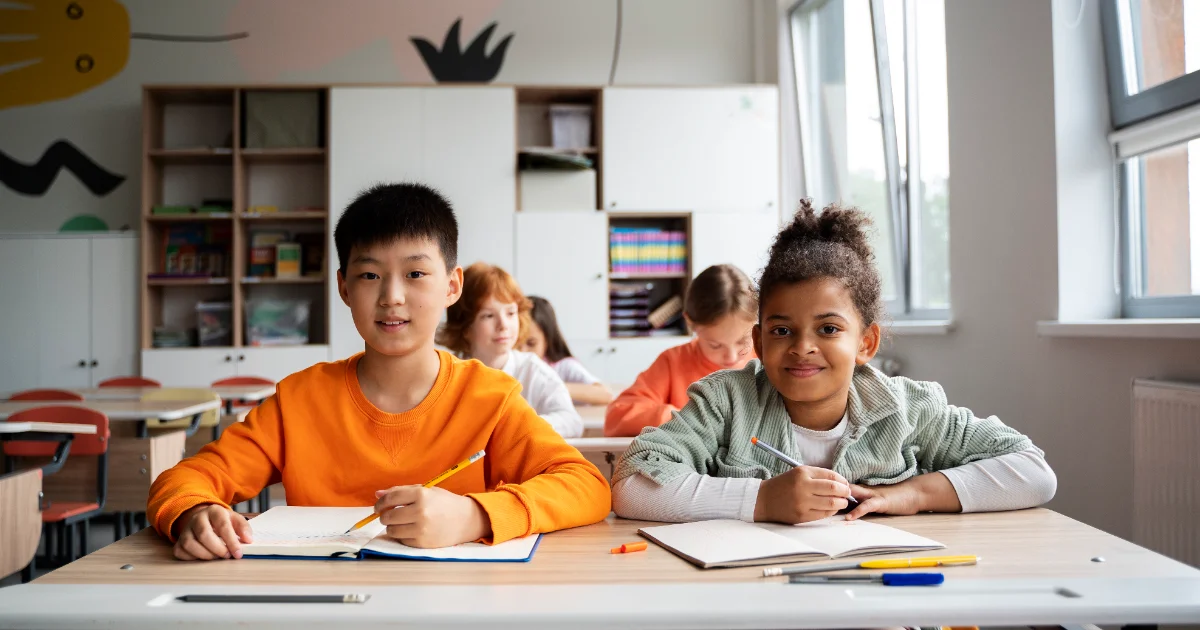
Your child can ace a spelling test but freeze when asked to present, or know the answer but never raise their hand. The gap is rarely knowledge. It is soft skills: the human abilities that decide how well a child uses everything else they know.
This guide explains what soft skills are, why they matter so much for children in Singapore, and the practical ways to build them, starting with the one that ties them all together.
1. What Are Soft Skills?
Soft skills are the people and self-management skills that shape how a child learns, works, and relates to others. Communication, confidence, resilience, teamwork, empathy, and self-discipline all count. They are different from hard skills, which are the measurable, teachable things like spelling, multiplication, or coding.
The simplest way to see the difference: hard skills are what a child knows; soft skills are how they use it. A child can know the answer, but it takes confidence to say it, communication to explain it, and resilience to try again when they get it wrong. Soft skills are the operating system everything else runs on.
And unlike personality, they are learnable. Every soft skill can be taught and strengthened with practice.
2. Why Soft Skills Matter for Children in Singapore
In a system known for academic rigour, it is easy to assume grades are everything. They are not. Singapore's Ministry of Education builds soft skills directly into school through its Social and Emotional Learning framework, because the evidence is clear that these skills underpin both wellbeing and achievement.
They matter even more for the world your child is growing into. As routine tasks are automated, the human skills are the ones that hold their value. The World Economic Forum's Future of Jobs Report 2025 ranks skills like communication, resilience, and collaboration among those rising fastest in importance.
Closer to home, soft skills show up in every milestone that matters in Singapore: speaking up in class, the PSLE Oral, DSA interviews, and group projects. A child who is strong in these is set up to thrive.
3. The Soft Skills That Matter Most
Soft skills is a broad term. For a school-age child in Singapore, a few matter more than the rest.
- Communication. Expressing ideas clearly and listening well. It is the skill that makes every other one visible.
- Confidence. The self-belief to speak up, try, and recover from mistakes.
- Resilience. Staying steady and trying again when things are hard.
- Collaboration. Listening, sharing, and working with others toward a common goal.
- Self-management. Focus, follow-through, and managing emotions.
These are not separate boxes. They reinforce each other, and they grow fastest when a child practises them in real situations, not just hears about them.
4. How to Build Soft Skills at Home
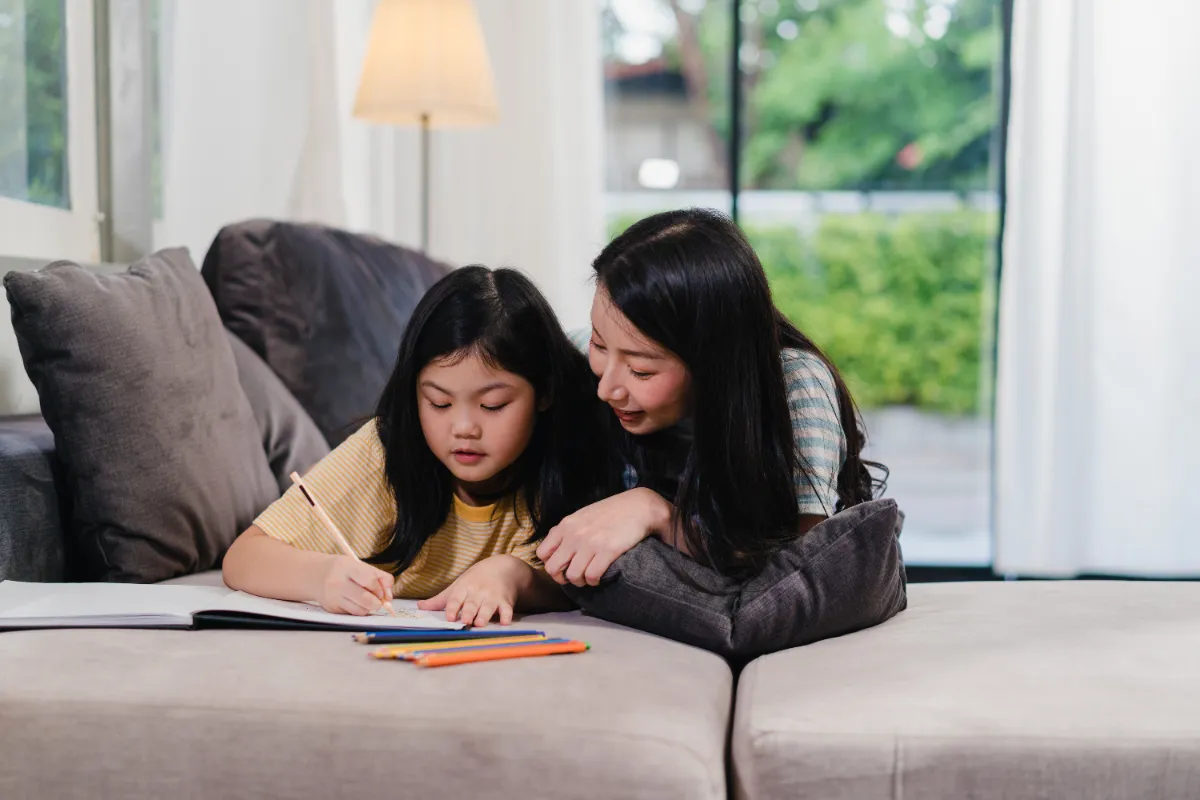
Parents build soft skills long before any class, through small daily habits.
Talk, and really listen. Ask open questions at meals and give your child space to finish their thoughts. Everyday conversation is the simplest soft-skills workout there is.
Let them struggle a little. Resist fixing every problem. Wrestling with something and getting there builds resilience and confidence at once.
Give real responsibilities. A chore that matters to the family teaches follow-through and accountability.
Praise effort and character. Notice the trying, the kindness, and the bouncing back, not just the result.
Model it. Children copy the listening, patience, and calm they see in you.
5. Why Communication Is the Keystone Soft Skill
If you build only one soft skill, build communication. It is the one that unlocks the others. A child who can express an idea and listen well can show their confidence, contribute to a team, and recover out loud from a setback. The skill is visible, and it compounds, as we explore in how communication skills compound.
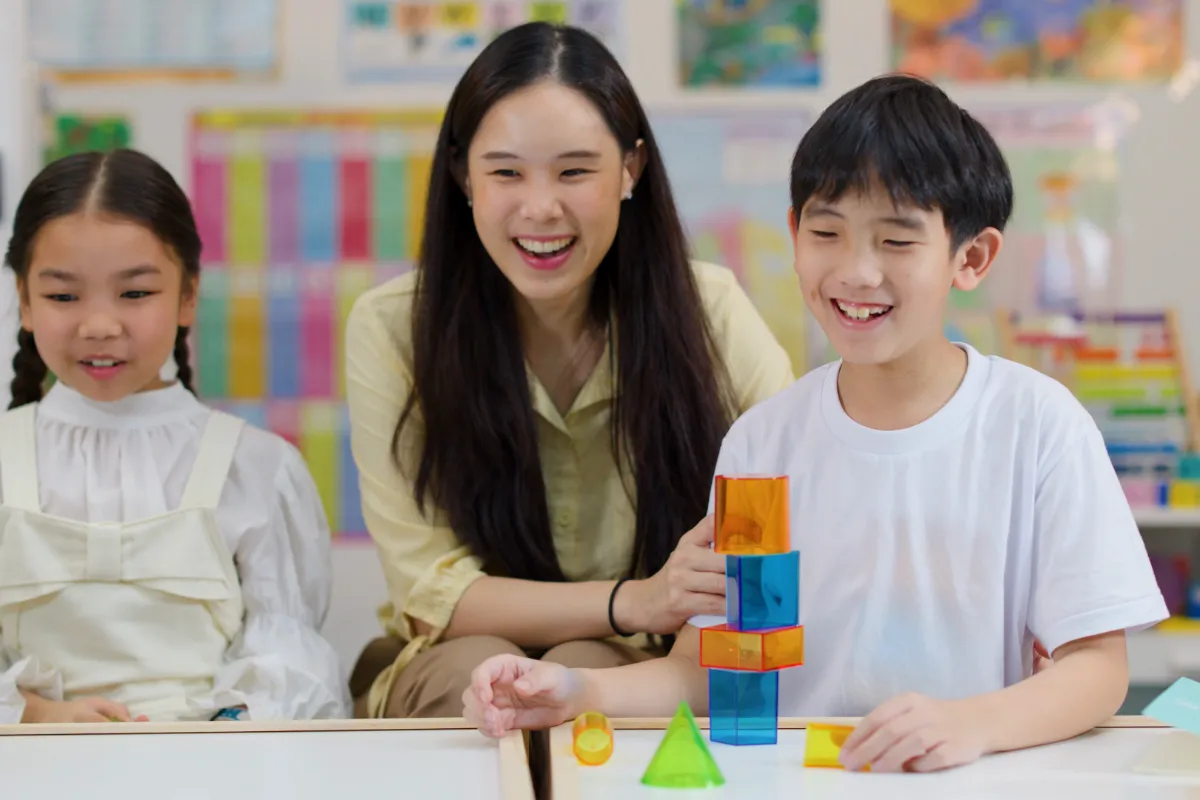
This is also where a structured programme helps most. In a small group, a child gets to practise speaking, listening, and thinking on their feet with real feedback, in a way that everyday life does not always provide. Building character and confidence goes hand in hand with it.
6. About SuperMinds
SuperMinds is Singapore's communication specialist for children and teens aged 9 to 17. Best known for public speaking, we help young people find their voice: the confidence to speak up, lead, and succeed in school and in life.
Rather than teach "soft skills" in the abstract, we build them through public speaking and communication, the most practical and visible of them all. As children learn to speak clearly, listen, and handle a real audience, confidence, resilience, and collaboration grow alongside. The method was pioneered by Iwan Yang, Founder & Programme Director and Singapore's most reviewed communication trainer, with 3,000+ students coached and 500+ five-star reviews. Classes run in groups of no more than 8, with a video recording and a written coach evaluation after a trial.
We run classes for children (ages 9 to 12) and classes for teens (ages 13 to 17) at 250 Tanjong Pagar Road, St Andrew's Centre, #04-01, Singapore 088541, near Tanjong Pagar MRT. A trial class is S$59.50. WhatsApp us at +65 6602 8262.
7. Frequently Asked Questions
What are soft skills, in simple terms?
Soft skills are the people and self-management skills, like communication, confidence, resilience, and teamwork, that shape how a child uses everything else they learn.
What is the difference between soft skills and hard skills?
Hard skills are measurable, teachable abilities like maths or spelling. Soft skills are how a child applies them: speaking up, working with others, and staying resilient. Both matter, but soft skills decide how far the hard skills go.
Can soft skills be taught?
Yes. Soft skills are learnable, not fixed traits. With regular practice, encouragement, and real situations to apply them, any child can strengthen them.
What are the most important soft skills for a child?
Communication, confidence, resilience, collaboration, and self-management. Communication is the keystone, because it makes the others visible.
At what age should my child start building soft skills?
Soft skills grow from the earliest years through everyday interaction. Structured practice, such as a public speaking programme, is most effective from around age 9.
How does public speaking build soft skills?
Public speaking exercises several soft skills at once: it requires clear communication, the confidence to be heard, the resilience to handle nerves, and listening to engage an audience. That makes it one of the most efficient ways to build them.
The fastest way to build your child's soft skills is to grow the one that carries the rest. Book a trial class for S$59.50 and see where your child stands.